

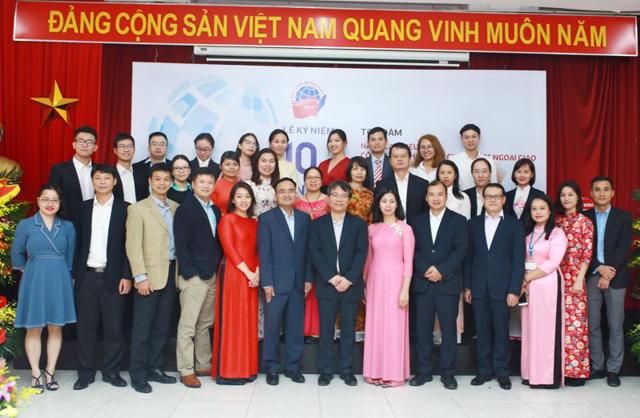
Proceedings Commemorating the 10th Anniversary of the Diplomatic Strategic Studies Institute
The idea of establishing the Institute for Foreign Policy and Strategic Studies was mentioned as early as 2003 - 2004, when the leadership of the Ministry of Foreign Affairs recognized the need to develop both fundamental and in-depth research within the Ministry. However, the idea was only realized in 2008 when Deputy Prime Minister Phạm Gia Khiêm concurrently served as Minister of Foreign Affairs.
Based on the assessment of needs, resources, and the experiences of major universities and research institutes around the world and in the region, the Ministry’s leadership decided to establish the Institute for Foreign Policy and Strategic Studies under the Diplomatic Academy of Vietnam. The goal was to elevate the Institute’s status, strengthen its research capacity, and link its work closely with the Ministry’s activities while also contributing to teaching and knowledge dissemination. The Institute was divided into centers by research fields rather than geographic regions. Accordingly, the Institute for Strategic Studies was formed by merging existing research divisions of the former Institute of International Relations (including the Northeast Asia Studies Division, Southeast Asia Studies Division, and Europe-America Studies Division) into four centers: the Center for Politics and Security, the Center for Regional Studies and Foreign Policy, the Center for Integration and Development, and the Center for East Sea Studies.
Over the past 10 years, the Institute for Foreign Policy and Strategic Studies has continuously developed, adapted, and innovated, overcoming various challenges to better meet the foreign policy needs of the Ministry of Foreign Affairs.
First, the Institute overcame many initial difficulties, particularly regarding human resources. Mr. Đặng Đình Quý was appointed by the Ministry's leadership as the Institute’s first Director. However, with staff limited to those from the former research divisions of the Institute of International Relations, the Institute faced challenges in meeting its tasks, especially the need to conduct research closely aligned with the Ministry’s foreign affairs work. In response, Mr. Quý mobilized officials from various specialized departments of the Ministry—such as the Department of General Economic Affairs, the ASEAN Department, and the European Department to transfer to the Institute. Today, the Institute’s staff has grown significantly in both quantity and quality, with a highly qualified team (15 PhDs and 14 Masters currently working domestically) increasingly specialized in various areas of foreign affairs. It can be said that the Institute now has reputable experts on the United States, China, Cambodia, major power relations, foreign policy, and international integration.
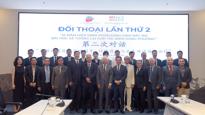
Second, although a newly established research institute, the Institute inherited a network of cooperation from the former Institute of International Relations and has built strong partnerships with government agencies and major research institutes both domestically and internationally. The Institute serves as the focal point assisting the Academy’s leadership in coordinating Vietnam’s participation in major regional and international Track 2 and Track 1.5 diplomacy networks. Mechanisms such as the Council for Security Cooperation in the Asia Pacific (CSCAP), ASEAN - ISIS network, ASEAN - China Strategic Research Institutes Network (NACT), and the Network of East Asian Think Tanks (NEAT); as well as annual bilateral dialogues with major research institutes and policy advisory centers in major powers and neighboring countries (China, the U.S., Laos, Cambodia, Japan), serve as important platforms for defending Vietnam’s interests through scholarly channels - especially in countering false narratives related to maritime sovereignty - and for testing new diplomatic initiatives and ideas. In Hanoi, the ISS also maintains regular engagement with embassies such as those of the U.S., Japan, China, and Singapore.
Third, the Institute has taken part in nearly all major policy planning initiatives of the Ministry of Foreign Affairs and contributed to advising the Party and State leadership. Examples include drafting the Politburo’s Resolution 22 on International Integration; Resolution 06/NQ-TW of the Party Central Committee on effectively implementing international economic integration while ensuring political and social stability; and contributing to the Secretariat’s Directive No. 25 on elevating multilateral diplomacy. In addition, the Institute has participated in preparing content for major foreign affairs events of the Party and State, such as Vietnam’s ASEAN Chairmanship Year 2010 and APEC Chairmanship Year 2017. Recently, to better align with foreign policy activities, the Institute has established new research centers with flexible mechanisms, such as the APEC Research Center and the Global Mekong Research Center.
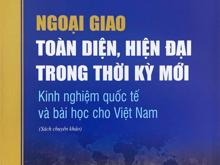
Fourth, each year, the Institute carries out dozens of research projects, thematic studies, and reports on international relations and foreign affairs. The Institute has been and continues to be the focal point assisting the Ministry and the Academy’s leadership in managing three major state-level research projects. The Institute itself has completed 41 ministerial-level research projects, published 28 books, and produced dozens of international journal articles and book chapters. These provide valuable reference materials not only for foreign policy planning by the Ministry of Foreign Affairs but also for external information and communication efforts.


Copyright ® 2026 Học viện Ngoại giao - Diplomatic Academy of Vietnam | Điều kiện | Bảo mật