

Southeast Asian Affairs is an annual book series first published in 1974, edited by the ISEAS – Yusof Ishak Institute and published by ISEAS Press. Over 47 editions, the series has become an important reference, providing in-depth analysis of economic, political, and socio-cultural issues for scholars, government officials, the business community, media, and anyone interested in contemporary Southeast Asian affairs. The books compile contributions
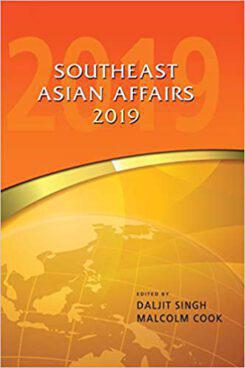
from reputable scholars, researchers, and commentators in the region, offering diverse and insightful perspectives on a rapidly changing and diverse region. Southeast Asian Affairs 2019 consists of two volumes, reflecting political developments in the region as a whole and in the 11 Southeast Asian countries, providing timely analyses of new developments at both national and regional levels. Four overarching themes run through the book: the Indo–Pacific, China’s economic penetration into the region, regime change (elections), and identity politics—the resurgence of morality and nationalism. These themes link the chapters together, highlighting structural (rather than temporary) factors that will shape the future direction of the region and its countries. In the chapter “Vietnam and the Mekong Cooperation Mechanisms”, authors Tô Minh Thu and Lê Đình Tĩnh (Diplomatic Academy of Vietnam) provide a comprehensive overview of existing cooperation mechanisms in the Mekong subregion, major developments within these mechanisms in 2018, and prior periods. The authors note that 2018 marked significant milestones for major Mekong subregional mechanisms, with both subregional and external countries demonstrating strong commitment to making these mechanisms more effective and responsive to regional development needs in a sustainable manner. The chapter also examines Vietnam’s perspectives and policies regarding the Mekong and its participation in subregional mechanisms. Vietnam’s contributions are highlighted through key events, such as hosting the 6th Greater Mekong Subregion Summit, the 10th CLV Summit in Hanoi, and active participation in multiple regional cooperation frameworks. Amid numerous short- and long-term challenges, Vietnam’s objectives in the Mekong include promoting regional cooperation on water management, connectivity, sustainable development, and security. Vietnam pursues approaches based on widely recognized laws and practices, including reasonable, equitable, transparent, open, inclusive, and consultative use of water resources, while respecting cooperation mechanisms and ASEAN’s central role. For access, readers may contact the Institute for Strategic Studies, Diplomatic Academy of Vietnam, 69 Chua Lang Street, Dong Da District, Hanoi.


Copyright ® 2026 Học viện Ngoại giao - Diplomatic Academy of Vietnam | Điều kiện | Bảo mật