


Currently, the Faculty is teaching International Economics and International Business majors.
International Economics and International Business share many similarities: both share the same basic subjects in their training programs, both require students to have good English skills as they have to learn from English materials and specialized subjects.
Students studying these majors have 2 directions to develop themselves:
- Firstly, becoming a supply chain manager, working in the logistics, import and export industry. If choosing this direction, students will learn more about foreign trade operations.
- Secondly, performing management activities at businesses or in other areas of businesses including marketing, human resource management (HR), sales management, financial operations in the company and business (exchange rates, international payments). Students are trained to recognize and solve problems in planning and implementing international business operations.
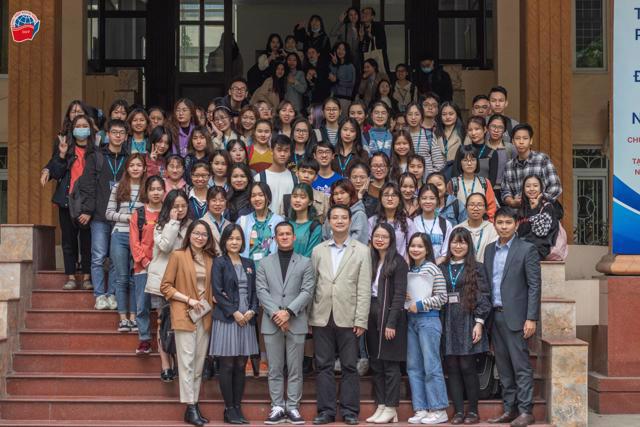
Regarding the differences between International Economics and International Business, in general, the two majors have differences in specialized subjects, in which the former leans towards macroeconomy while the latter leans towards microeconomy.
International Business belongs to the management sector. This major will teach students basic knowledge of management studies, corporate governance, business administration and specialized knowledge in international business such as international investment, logistics and international transportation, international payments, international marketing, international business strategic planning.

Compared with International Business, International Economics has a more macro nature. Students are provided with basic knowledge of the international economic system, focusing on 2 main fields of international trade and international investment. Students with a Bachelor’s degree in International Economics are equipped with knowledge and theory on international economic relations, the basis of analysis and planning foreign economic policies, international economic development characteristics in globalization; issues of international integration and investment in Vietnam. Furthermore, the Bachelor of International Economics’ training program at the DAV also has many interesting modules related to international relations and foreign affairs; international laws, communication in the international environment; and the role of diplomacy in developing economies.







Copyright ® 2026 Học viện Ngoại giao - Diplomatic Academy of Vietnam | Điều kiện | Bảo mật