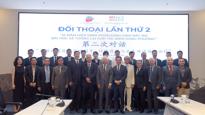


In recent years, the Mekong region has witnessed tremendous changes. Along with the economic development of the member countries, the Mekong River basin is facing great environmental challenges. A series of economic and technical solutions have been proposed.
A series of economic and technical solutions have been proposed. Along with that, strengthening international efforts in water resource management and protection, aiming at sustainable development is the top priority in cooperation at sub-regional cooperation mechanisms.
Mekong-Lancang Cooperation: sufficient and complete
Among the more than 10 existing cooperation mechanisms in the Mekong Subregion, the Mekong-Lancang Cooperation (MLC) mechanism is emerging with many advantages and great expectations. This is a mechanism with the participation of all 6 countries along the Mekong-Lancang River, namely Vietnam, Cambodia, Laos, Myanmar, Thailand and China; with cooperation content covering many fields.
MLC was established on March 23, 2016 with the adoption of the Sanya Declaration by the senior leaders of the six countries. The conference emphasized the need to strengthen cooperation between countries for common interests and the importance of the Mekong River to the development of the Sub-region and the lives of its people. The Declaration identified a cooperation framework based on three pillars: (i) politics and security, (ii) economy and sustainable development, (iii) society, culture and people-to-people exchanges with five priority directions: connectivity, improving production capacity, promoting cross-border economic cooperation, cooperation in water resources management, agricultural development and efforts to eradicate hunger and reduce poverty.
Initial results
With only 4 years of operation, MLC has demonstrated its dynamic development by forming a working mechanism from high level to specialized working groups and implementing field projects in member countries. Up to now, MLC has basically maintained the mechanism of high-level meetings every two years, annual ministerial meetings, SOM meetings and working groups. Six member countries have agreed to establish 5 cooperation centers within the framework of MLC including: Water Resources Cooperation Center, Environmental Cooperation Center, Agricultural Cooperation Center, Youth Exchange Cooperation Center and Vocational Training Center.
In addition, the countries also promote academic exchanges through the establishment of the Mekong Global Research Center. At the 2nd Mekong-Lancang Summit in 2018, the countries agreed to adopt the Action Plan 2018-2022 with specific cooperation contents on each pillar. To date, MLC has implemented more than 400 projects using the MLC Special Fund. The MLC's operating mechanisms have gradually come into operation, initially building and implementing action plans.
As a later mechanism, MLC has been on the right track in demonstrating its joint efforts with other mechanisms. On December 18, 2019, the Lancang-Mekong Water Resources Cooperation Center signed a Cooperation Agreement with the Mekong River Commission (MRC) Secretariat. This is the first cooperation agreement between MLC and another cooperation mechanism. The agreement will help to make some key areas of cooperation such as data and information exchange, basin-wide monitoring, and joint assessment of water resources and related resources in the Mekong River more effective.
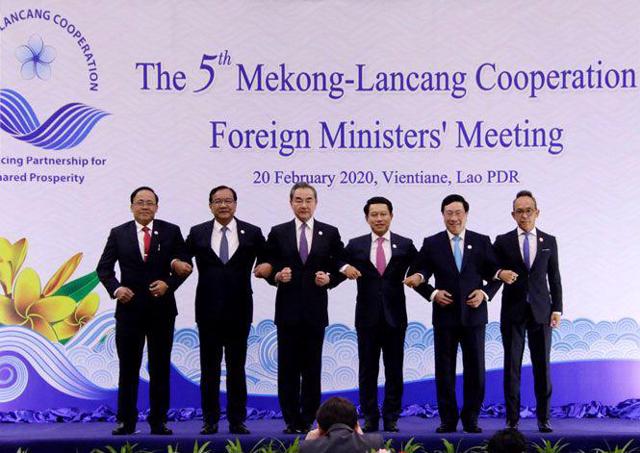
At the 5th MLC Ministerial Meeting in Vientiane (Laos) in February 2020, the Ministers proposed the following priorities for the MLC in the coming time: (i) Accelerating the development and implementation of the action plan on regional connectivity, production capacity, water resources, trade, agriculture; enhancing cooperation in responding to natural disasters, epidemics, and cross-border crimes; (ii) Promoting exchanges and dialogues between local authorities and border gate management agencies; and (iii) Improving the operational efficiency of the MLC Special Fund. The MLC will also strengthen the MLC's connection and complementarity with relevant regional cooperation mechanisms such as the Association of Southeast Asian Nations (ASEAN), the Greater Mekong Subregion (GMS), the Mekong River Commission (MRC), and the Ayeyawady-Chao Phraya-Mekong Economic Cooperation Strategy (ACMECS).
Since the establishment of the MLC mechanism, Vietnam has actively promoted the MLC to strengthen cooperation in protecting, managing, using water resources effectively and sustainably, and considered this a focus of cooperation among the six countries. During its participation in the MLC, Vietnam has proposed a number of cooperation projects related to ensuring water security, put forward specific initiatives such as establishing a communication channel (hotline) in cooperation in handling emergency situations on the Mekong River, which has been supported by countries and has been put into practice. Vietnam also supports the construction of a financial mechanism for natural disaster risk insurance and support for reconstruction, overcoming consequences, and joint scientific research cooperation through the Mekong-Lancang Water Resources Cooperation Center. Many domestic and international seminars on sub-regional cooperation and research cooperation activities within the framework of the Mekong Research Center have been held. In 2020, Vietnam has registered and will implement four projects with a total budget of nearly 1.5 million USD in areas such as enhancing flood and drought management capacity, facilitating and improving the efficiency of cross-border trade, harmonizing laws and standards among Mekong-Lancang member countries, and improving capacity in import-export skills.
Faced with major challenges in development and environment, in the context of the Covid-19 pandemic which is significantly affecting the socio-economic activities of all member countries, at the 5th MLC Ministerial Meeting, Deputy Prime Minister and Foreign Minister Pham Binh Minh called on countries to cooperate in increasing the resilience of economies to unpredictable fluctuations and instability, focusing resources on vulnerable areas that are important to the economic development of member countries.
MLC with the expectation of a sustainable Mekong sub-region development
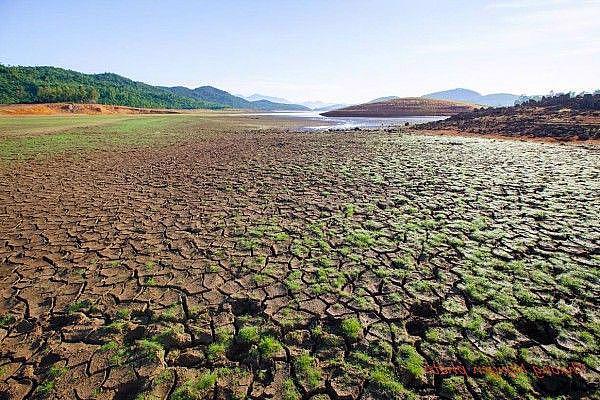
The MLC was born at a time when the issue of water security became more urgent and urgent than ever. 2016 marked a sad record of drought in the Mekong River when the water level in many areas dropped to a record low not seen in decades, even hundreds of years. Since the beginning of the year, farmers in Thailand, Cambodia and Vietnam have witnessed unprecedentedly dry and cracked fields. The issue of ensuring water security and enhancing cooperation in managing the Mekong - Lancang trans-border river is the highest priority not only for Vietnam but also for many other member countries.
With the participation of China, MLC is expected to create more dialogue forums between countries sharing the Mekong River water resources, complementing the activities of MRC, to jointly protect the river. The successful organization of the first Water Resources Cooperation Forum and the signing of the Cooperation Agreement between the MLC Water Resources Cooperation Center and the MRC Secretariat opens up prospects for increased sharing of hydrological data and information, cooperation in handling emergency situations such as floods, droughts and other disasters, and improving water resources management capacity to ensure sustainable and rational use of water resources.
Infrastructure development, production capacity enhancement, and sustainable agricultural development have always been development priorities of member countries. The MLC cooperation mechanism, with its advantages, has brought new impetus to cooperation towards sustainable development in the Mekong sub-region. China is a major investor in infrastructure projects, an important market, and a catalyst for economic development. Therefore, cooperation in development fields between sub-regional countries and the world's second largest economy is expected to open up opportunities for long-term and sustainable economic development for member countries.
Although coming later, MLC is expected to promote regional cooperation based on the basic principles of cooperation: consensus, equality, coordination and mutual consultation, voluntariness, joint contribution and benefit sharing, respect for the United Nations Charter and international law. With the successes in recent times, MLC needs to continue to expand coordination with existing cooperation mechanisms in the region such as the Mekong River Commission, the Greater Mekong Subregion Cooperation, ACMECS, the Mekong-Japan Cooperation or the Lower Mekong Initiative towards the goal of sustainable development in the whole region. Through that, MLC can play a more active role not only in water resources management but also in other areas of cooperation.
Maintaining the momentum of cooperation is always a challenge for multilateral mechanisms, requiring the efforts of all members. Above all, MLC needs to focus on substantive cooperation that can create positive changes in core issues of the sub-region, especially the issue of water security, promoting sustainable and balanced development in each member country.
Minh Thu


Copyright ® 2026 Học viện Ngoại giao - Diplomatic Academy of Vietnam | Điều kiện | Bảo mật