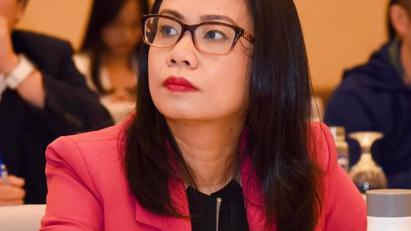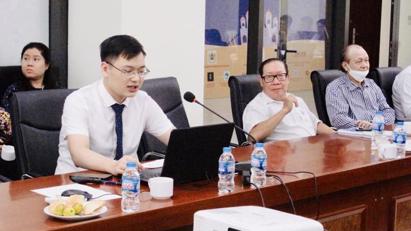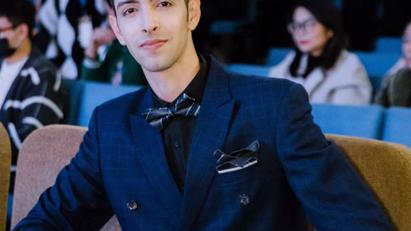

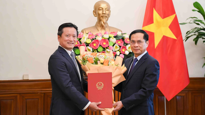
From the lecture halls of the Diplomatic Academy to international "hotspots," Thuy Van's journey exemplifies the endurance of knowledge, discipline, and humanitarian spirit. A graduate of the Diplomatic Academy, she chose the path of foreign journalism—a challenging choice that has taken her through deep archives in France, refugee camps on Ukraine's borders, and frontline news coverage. At each destination, she doesn't merely report news, but tells Vietnam's story with a journalist's objectivity, a diplomat's mindset, and a woman's humanitarian heart. For her, foreign journalism is a form of diplomacy: bridging the nation with the world, and connecting seemingly distant peoples through a common language—empathy.
A Defining Choice and the Foundation of "Diplomatic Thinking"
For many students, university gates mark the beginning of a journey, but for Thuy Van, it was also a fateful crossroads. At 18, she faced a choice between two prestigious institutions coveted by many: the Foreign Trade University and the Diplomatic Academy. This wasn't merely about choosing a major, but answering the question: where would her career and life lead? "That day, I was accepted to both Foreign Trade and the Diplomatic Academy Vietnam—two prestigious environments. But the allure of diplomacy, the image of officials 'campaigning' abroad, led me to choose the Diplomatic Academy to entrust four years of my youth," she shares.
What seemed like a decision about academic study actually shaped her entire personal journey. Within the Diplomatic environment, amid International Law classes, Diplomatic History, and heated debates in lecture halls, she found a solid foundation for journalism: objectivity, empathy, and above all, a perspective that always places national interests at its core. "As a commentator on international events, foundational understanding of the world and Vietnam's perspectives and position is extremely important," she shares. One could say the Academy gave her not only knowledge, but also cultivated within her "diplomatic thinking"—viewing every issue through Vietnam's lens in a global context.
Thuy Van's connection with journalism came naturally. Around her third and fourth years, a cultural television program opened new doors: from collaborative days and acquaintance with experienced hosts to internships at Voice of Vietnam. Everything flowed naturally: graduating in 2002, she officially applied to VOV, joining the Party ranks that same year.
Notably, from her first days in the profession, she didn't choose the easy path. Thuy Van stepped into a traditionally dry and challenging field: international political commentary. This work demands extensive reading, meticulous verification, and most importantly, knowing how to "translate" the world's complex movements into stories accessible to domestic audiences. At this intersection, she realized: the Academy had given her the language of policy, while journalism trained her in the language of the public. When these two languages merged, she found her professional voice.
Recalling her student experiences, she shares what seems like a small detail but has grown more meaningful over time: during a 2000 Francophone youth scholarship trip to Europe, she was unexpectedly asked, "Is Vietnam still at war?" The question was both amusing and startling. But as she became more devoted to her profession, she increasingly understood: she had a responsibility to tell Vietnam's story properly, modernly, and more humanely—not just her personal work, but a mission for the entire diplomatic field and countless generations who have helped build the nation's image. "I'm proud that abroad, I get to be a 'diplomat in quotation marks'—bringing accurate information about our country to Vietnamese communities and international friends," she concludes. This statement, both simple and encompassing the essence of her chosen path, reveals that foreign journalism isn't just a profession, but also a form of diplomacy—a bridge extending from Diplomatic lecture halls to broadcast studios, from textbook pages to news bulletins.
Six years in France: Behind the Doors of the Archives and into the Heart of the Action
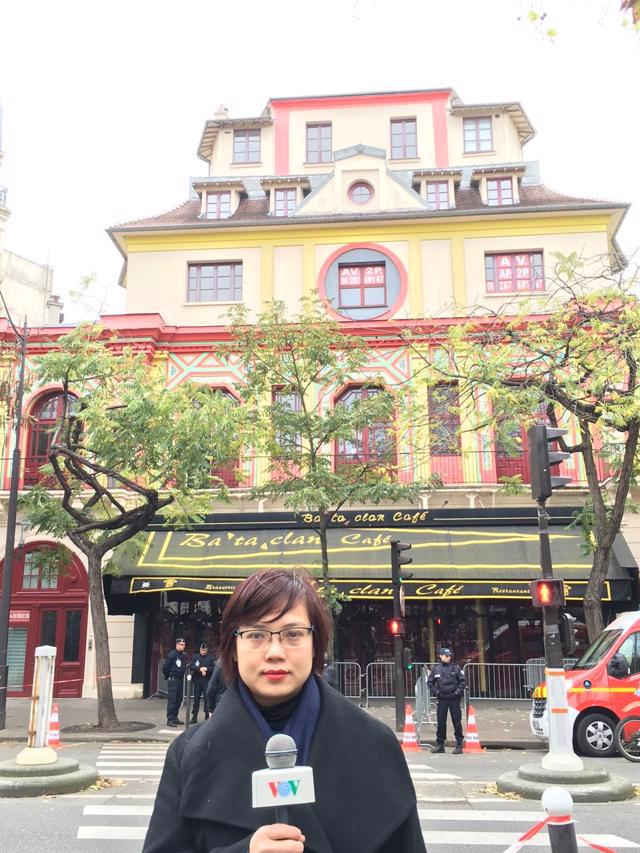
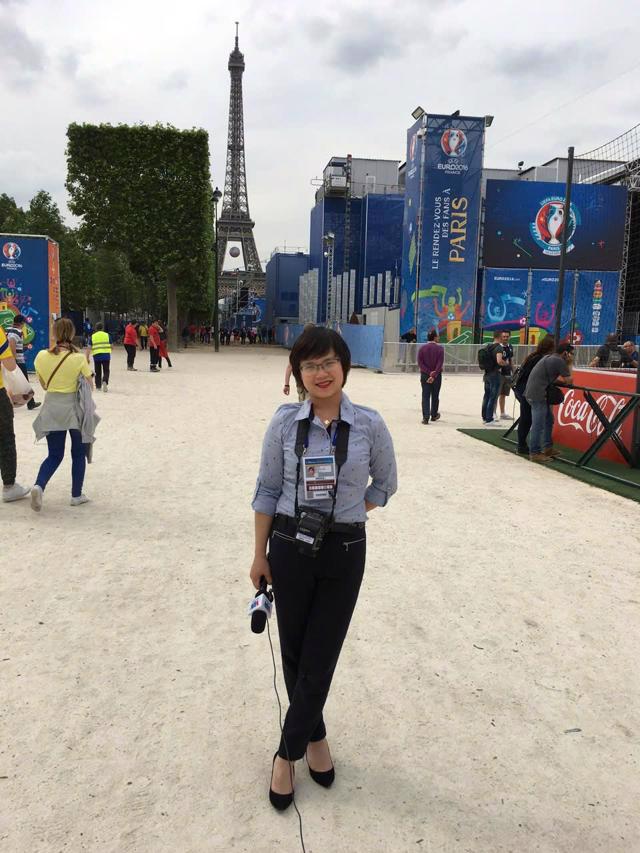
From 2011-2017, as Head of VOV's permanent office in the French Republic, also covering Western Europe, Thuy Van's work went beyond reporting European politics, economics, and society to serving as a connecting thread: between Vietnam-France, Vietnam-EU, and above all, between homeland and overseas Vietnamese communities. Six years in Europe meant six years of persistence on two "fronts": archives and field reporting, to tell truthful stories with both historical and humanitarian value.
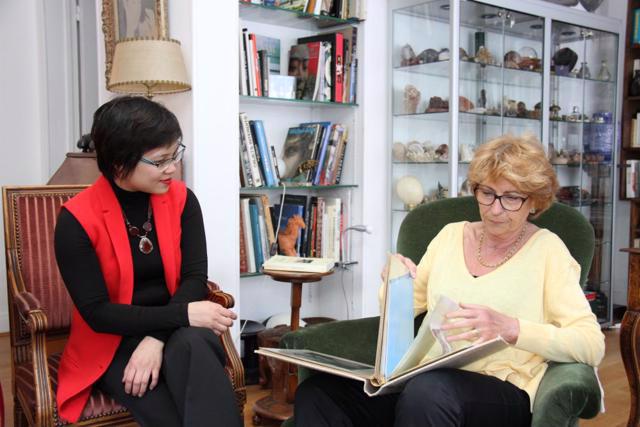
She vividly remembers traveling nearly 800 kilometers from Paris to the Overseas Documentation Center, one of the largest archives on Vietnam and Indochina. "To access a document 'collection,' you had to schedule weeks in advance; once there, only a few days to read, select, photograph, and cross-reference. Evenings back at the hotel meant organizing articles, transcribing recordings, cross-checking timelines. Everything was like a race," she recounts. This work wasn't glamorous but demanded patience; this persistence helped her trace the French secret investigation committee on the Dien Bien Phu defeat—files classified "top secret" for half a century. "When I found these files during the 60th anniversary of the Dien Bien Phu Victory, the painful French conclusions—why they lost and why Vietnamese won—held not only historical but humanitarian value," she shares. When the first article aired, domestic media joined in unison. "To maintain initiative, I always prepared 2-3 follow-up pieces with complete materials, citations, and cross-references, so the story wouldn't stop at breaking news but become a flow of knowledge."
Beyond archival work, Thuy Van persisted with contemporary hot topics, including Hoang Sa-Truong Sa sovereignty issues. Using personal credibility and international relationship foundations, she convinced a leading European international law expert—who had advised the Vietnamese government—to accept an interview despite previous media refusals. The "Vietnam's Sovereignty from International Law Perspective" series later earned her the National Press Award Class A in 2012—proof that foreign journalism can create both scientific and social impact.
If archives are places to rediscover memory, then the field tests professional endurance. She recalls days with her husband, also a colleague, visiting border refugee camps to report on Vietnamese compatriots fleeing Ukrainian conflict. "We listened to fragmented stories, calculations about returning to collect remaining possessions. At those moments, no fear or fatigue—only the urge to tell truthfully, tell timely about war's pain, so those at home could understand and share," she recounts. For Thuy Van, these were the profession's "lovable difficulties": laborious but worthwhile when seeing her articles help communities ease anxiety.
What distinguishes Thuy Van's writing approach is her ability to tell stories from both sides. Under her pen, Dien Bien Phu isn't just military comparisons, but human destinies. She writes about Vietnamese veterans over 80 still speaking fluent French, amazing French historians. About French soldiers carrying beloved books, dropped during retreat, picked up and quietly treasured by Vietnamese. "In journalism, what matters is seeing 'human roots' in all conflicts," she concludes. This perspective makes each of Thuy Van's works not just news, but bridges—helping Vietnamese readers understand the world and helping the world understand Vietnam through humanity's common language: empathy.
One Life - One Journalism Career: Resonance, Leadership, and Passing the Torch
In her professional journey, Thuy Van has never considered it a solo endeavor. Her life partner, also a classmate and colleague, always serves as a "strategic map" while she acts as "field legs." She shares with a grateful smile: "I'm strong in skills: recording, filming, photographing, interviewing, quick situation handling. He has solid political analysis foundation and world perspective. We complement each other: he suggests directions, I find evidence." Behind this simple statement lies proof of teamwork's power, not just in newsrooms but within their own home, where both transform work into shared mission.
For her, balance isn't dividing work or responsibilities equally, but creating synergy. "Maintaining health and cultivating knowledge"—that's the first principle. Above all, family support serves as the "launching pad" for persistence on this high-pressure path. She recalls: "There were periods we spent entire days at archive centers, the children stayed at hotels reading books, then we'd dine together evenings. I'm grateful for that support, because it allowed absolute focus when sprinting toward deadlines." Children growing up alongside their parents' professional rhythm, learning independence early, also became a silent part of the journey.
In all her roles, the image of a female leader in foreign journalism emerges with harmonious balance between reason and emotion. She affirms: "Women have strengths in emotion and appreciation. I visit a Vietnamese community singing class far from home, seeing their efforts collecting teaching materials, arranging time... that's enough to realize the story isn't small at all. Emotion keeps us from boredom, as long as it's always accompanied by disciplined reading, cross-referencing, verification." This refined sensitivity makes her stories not just information, but touches to readers' and listeners' hearts.
She also doesn't hesitate to critique worn-out writing styles. "If we keep repeating anti-peaceful evolution patterns, praising victories, we'll lose the human element in stories. Read more, reflect more, maintain independent thinking to find perspectives that touch people's hearts." This independent thinking helps her see beauty in seemingly tiny details. Like the story she often tells students about "the candy in 1954": amid hunger and thirst, a candy dropped in a trench, passed hand to hand from wounded commander to more seriously injured comrades, then back to the commander. An unembellished detail that brilliantly illuminates messages about discipline, camaraderie, and human dignity in war. As she says: "Such details create collective memory, and journalism has the duty to preserve them."
From these experiences, she sends Diplomatic Academy students a heartfelt message. According to her, the Academy is a special "academic terrain": foundations in International Relations, International Law, history, and analytical methods are competitive advantages for those choosing foreign journalism. "If not pursuing professional diplomacy, we can still become excellent international political journalists." Responsibility and passion are twin pillars, while reading, researching, and avoiding templates are prerequisites for avoiding old speech patterns and finding new storytelling methods. She emphasizes preparation and field composure: knowing how to ask right questions, reach right places, talk to right people, and always have the "next article" ready.
Thuy Van, from a K25 Diplomatic Academy student years ago, is now Head of VOV's International Cooperation Department, but her lasting impact extends beyond news reports or research projects. It's how she transforms journalism into a continuous intellectual journey, where journalists must simultaneously read, reflect, and live within reality. It's how she maintains softness, femininity, and respect in every word, so readers see not just events in each article, but also humanity. For today's younger DAV generation, Thuy Van's story resembles an "orientation map." It contains professional challenges, valuable experiences, and seemingly simple but vital principles: responsibility, professional love, and Vietnamese character. This is also the message she conveys: dare to step into the world, but always carry a patriotic heart and humanitarian soul.
Perhaps someday, among DAV students reading this story, someone will follow her footsteps: venturing into distant archives for small details, standing at borders reporting crises, or simply retelling Vietnam's story with honest and tolerant voice. Because ultimately, as Thuy Van's journey has proven, foreign journalism isn't just a profession, but a form of service—serving truth, serving country, and serving humanity.
Thu Huyen


Copyright ® 2026 Học viện Ngoại giao - Diplomatic Academy of Vietnam | Điều kiện | Bảo mật