

In the era of Artificial Intelligence (AI) and the rapid advancement of new media technologies, the International Communication training program simultaneously ensures a systematic foundation of core knowledge in the Communication field while also reinforcing new content and new values. This enhances professionalism, practical application, and adaptability to the continuous changes of the social context and the global media environment, ensuring the objective of providing diverse career opportunities for students.
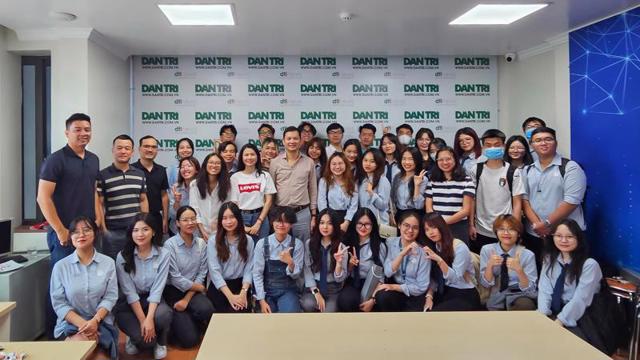
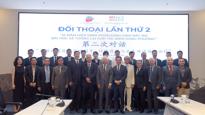
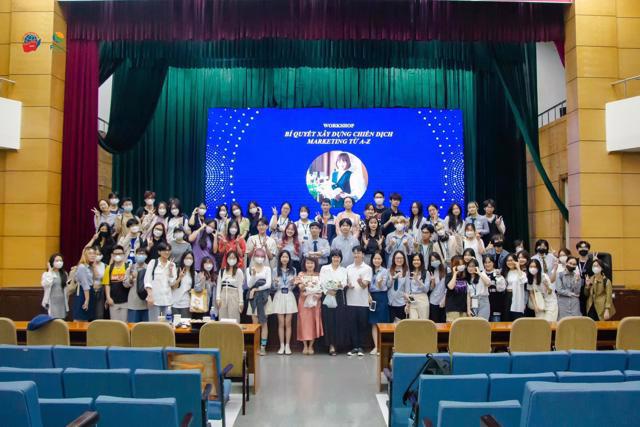
The Bachelor's program in International Communication is designed according to international standards, based on reference to training programs in the field of communication and culture offered by prestigious universities worldwide. Selected specialized courses are taught directly in English, which helps students master and improve their foreign language communication and writing skills. During their training, students have numerous opportunities to engage in international seminars, conferences, interact with foreign diplomats, renowned international communication experts, undertake internships at Vietnamese embassies abroad, foreign embassies in Vietnam, and participate in student exchange programs with partner universities worldwide, such as Monash University (Australia), Macquarie University (Australia), and Victoria University of Wellington (New Zealand), Wakayama University (Japan), Sungshin Women’s University (Korea)...
A holistic approach towards skill development is a crucial objective of the Bachelor's program in International Communication at the Diplomatic Academy of Vietnam. The program emphasizes the fusion of theoretical knowledge with practical application. In addition to conventional classroom learning, students are actively involved in research projects focusing on international communication and culture, internships at communication organizations, participation in extracurricular activities, media events, and television programs. These diverse engagements facilitate the development of a spectrum of skills encompassing both professional competencies (such as writing, presentation, program hosting, media product production, crisis management, and media event analysis) and vital soft skills (such as independent work, teamwork, time management, problem-solving, effective communication, and intercultural communication). These skills equip students with the necessary competence to perform roles in the communication industry after graduation, while also enabling them to easily integrate and succeed in a multicultural work environment.
The Faculty of International Communication and Culture has established a robust network of collaborations with various domestic and international agencies and organizations, including Vietnamese embassies abroad, foreign embassies in Vietnam, media agencies (such as Vietnam News Agency, Vietnam Television, Hanoi Television, Hanoi Moi Newspaper, The World and Vietnam Newspaper, Giao Thong Newspaper...), international organizations, non-governmental organizations and social enterprises (such as UNDP, Khau Pha Friends...), communication and marketing enterprises (such as Le Bros, Golden Bee, Sao Thang Tam...), and reputable universities worldwide (such as Monash University, Australia, Macquarie University, Australia, Victoria University of Wellington, New Zealand). This diverse network of partnerships facilitates students' exposure to leading experts in international communication and culture, both domestically and internationally, and provides avenues for internships and future career prospects.
Foundational Professional Knowledge:
Orientation Elective Courses
(i) International Communication Orientation
(ii) International Marketing Communication Orientation
Graduates of the International Communication program can work in diverse environments, from the public to the private sector, both domestically and internationally. With an interdisciplinary foundation, specialized skills, and strong foreign language proficiency, graduates can take on positions such as:
State agencies and media organizations: Editor, international correspondent, external relations specialist, policy communication specialist at ministries, local departments, or diplomatic missions.
Businesses and corporations: Communication, marketing, branding, or event specialist at domestic and foreign companies, multinational corporations, or communication consulting firms.
International and non-governmental organizations: Communication specialist, project coordinator, external relations officer, or social-cultural officer in NGOs, IGOs, and development organizations.
Education and academia: Lecturer, researcher, teaching assistant, or consultant in journalism, communication, and external relations.
Entrepreneurship and personal development: Founder of digital media projects, freelance communication specialist, or content creator on global digital platforms.
FURTHER STUDY PROSPECTS
The training program also provides a solid academic foundation for learners to continue on to higher education levels domestically and abroad, or to develop deep expertise in related fields such as international communication, marketing communication, cultural diplomacy, public policy, international relations, media education…
View the previous training program HERE.
View the current training program HERE.


Copyright ® 2026 Học viện Ngoại giao - Diplomatic Academy of Vietnam | Điều kiện | Bảo mật