

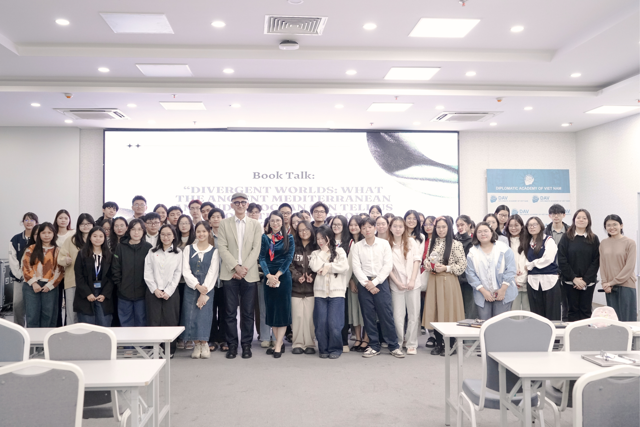
On November 6, the Faculty of International Politics and Diplomacy (FIPAD) welcomed Dr. Manjeet S. Pardesi (Victoria University of Wellington), co-author with Professor Amitav Acharya, for a book talk on “Divergent Worlds: What the Ancient Mediterranean and Indian Ocean Can Tell Us About the Future of International Order.”
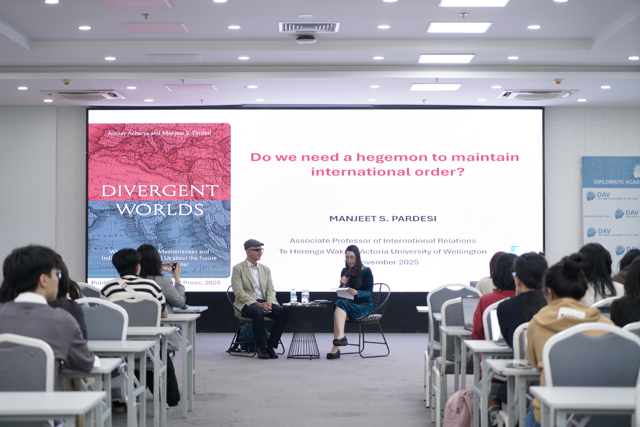
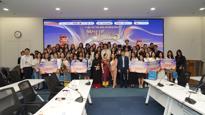
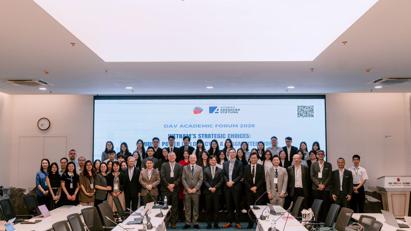
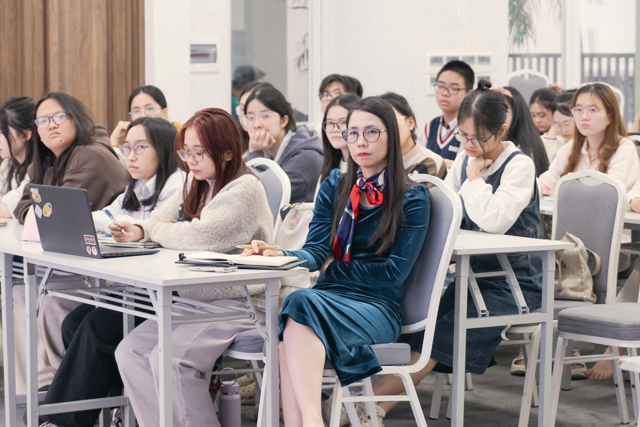
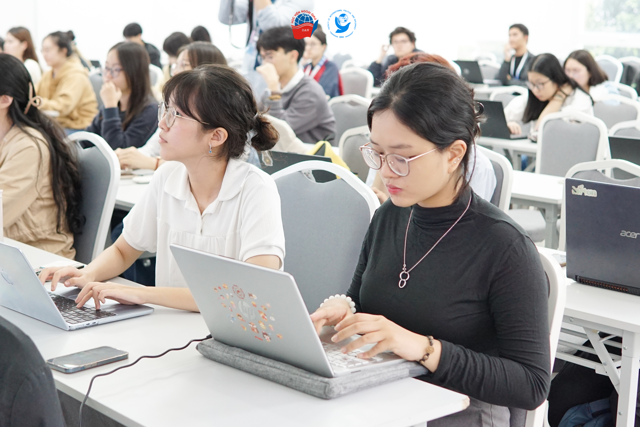
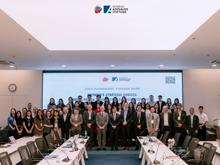
The event was attended by Dr. Le Thi Ngoc Han, Deputy Dean of FIPAD, along with faculty members and more than 80 students.
Through the presentation, students gained a deeper understanding of the research conducted by Prof. Amitav Acharya and Dr. Pardesi. Drawing on a comparative historical analysis of the ancient Mediterranean and the Indian Ocean worlds, the book offers a fresh perspective on the future of international order—one that is not anchored in hegemonic dominance but shaped by a “complex” system where multiple centers of power coexist and interact. Notably, the authors highlight Southeast Asia’s growing role in fostering peace, stability, and cooperation in the evolving global order.
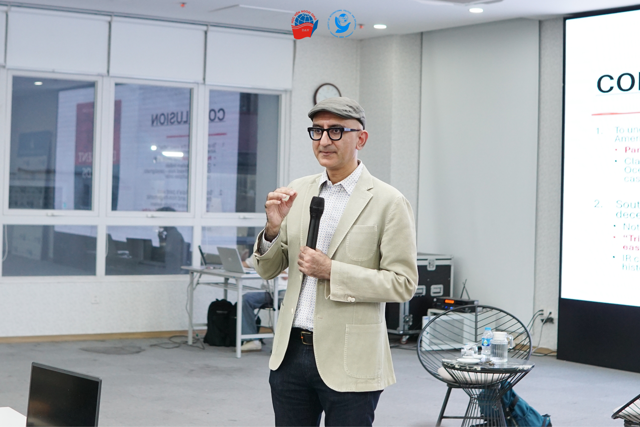
According to Dr. Pardesi, the ancient Indian Ocean represented a “multi-centered” order sustained by trade, flexible interactions among mandala-style polities, and mutual respect for distinct political and cultural identities. In this system, Southeast Asia was an active player shaping regional dynamics. This stands in contrast to the ancient Mediterranean, which operated under a centralized, hegemonic structure dominated by Rome through the “Pax Romana.” From this contrast, the book draws an important message: the international system does not necessarily require a single dominant power to function effectively. In a time when the Western liberal order is weakening, a multi-centered model—based on coexistence, diversity, and interconnectedness—may offer a more realistic and sustainable pathway for the 21st century.
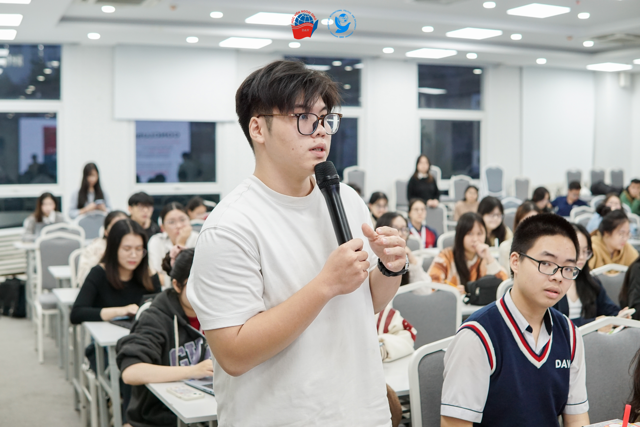
The Q&A session between students and the speaker was lively, with thoughtful questions that reflected strong academic engagement. The active participation demonstrated both the relevance of the topic and the intellectual curiosity of students at the Diplomatic Academy of Vietnam.
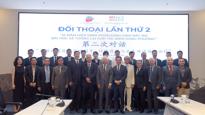
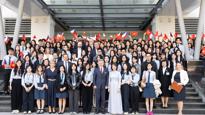
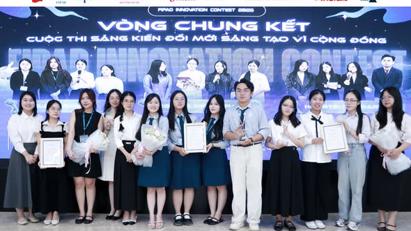
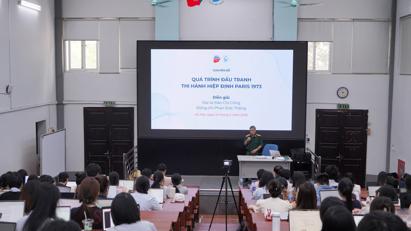
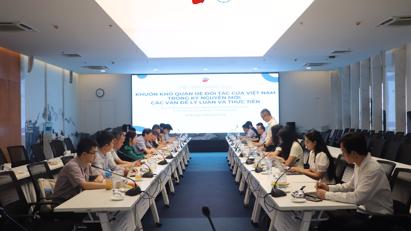
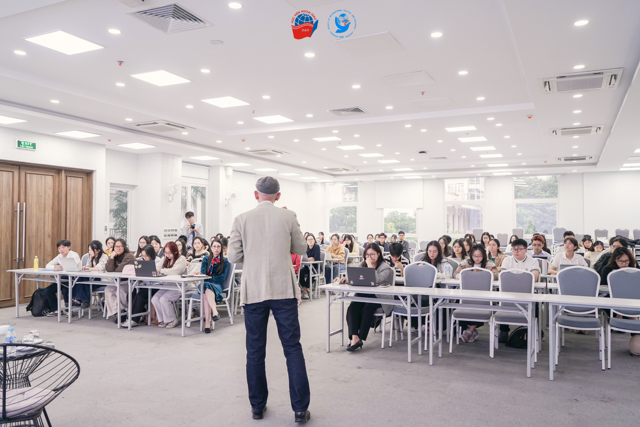
Some photos from the event:




Copyright ® 2026 Học viện Ngoại giao - Diplomatic Academy of Vietnam | Điều kiện | Bảo mật