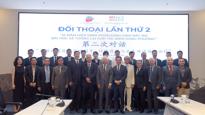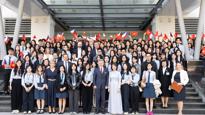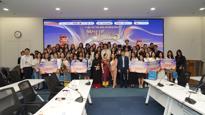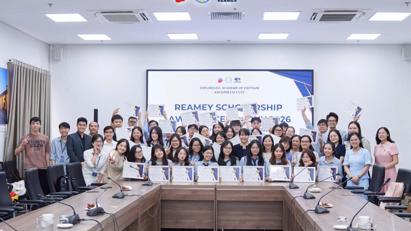



Team E-EYES with the project “E-EYES – An AI-Integrated English Learning Application Combined with a Tactile Interactive Board for Learners with Visual Impairments”
Implemented by:
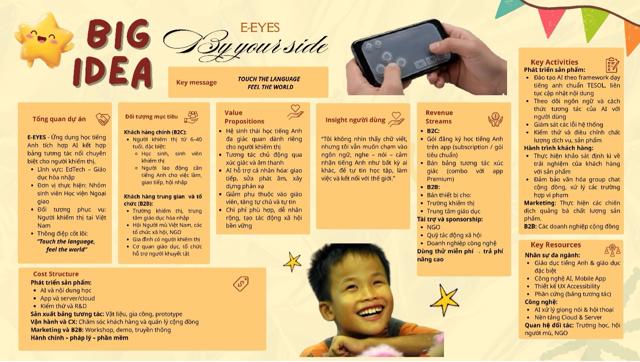
Within the framework of the competition “Students with Entrepreneurial Ideas in the Field of Education 2025” organized by the Faculty of English, Diplomatic Academy of Vietnam, Team E-EYES introduced E-EYES – a highly inclusive EdTech solution designed to support English language learning for people with visual impairments, thereby contributing to the advancement of inclusive education in Vietnam.
Project Concept and Objectives
The E-EYES project originates from the reality that millions of people with visual impairments in Vietnam face significant barriers in accessing foreign language education. While many young visually impaired learners aspire to study English for academic advancement, employment opportunities, and social integration, existing learning tools are largely designed for sighted users and fail to accommodate tactile and auditory learning needs.
E-EYES aims to reduce inequality in access to English language education by enabling visually impaired learners to study English in a more independent, personalized, and equitable manner, through the integration of artificial intelligence and multisensory learning design.
Solution and Key Values
E-EYES combines two core components into a unified learning ecosystem:
This innovative combination creates a multisensory learning experience, in which learners do not rely solely on listening and speaking, but can also “feel” the language through tactile interaction—a dimension rarely addressed by conventional language learning applications.
Through AI-driven personalization, E-EYES supports learners in:
The project’s guiding message, “Touch the language, feel the world,” reflects its strong humanistic orientation and commitment to empowering learners with visual impairments.
Feasibility and Development Potential
E-EYES demonstrates strong feasibility in both technological development and implementation. The mobile application can be deployed on widely used platforms, while the tactile interactive board features a simple, locally manufacturable design, enabling cost optimization and broader accessibility.
The project adopts a flexible implementation model, allowing for expansion across multiple channels: direct use by individuals (B2C), partnerships with schools for the visually impaired, inclusive education centers, social organizations, and NGOs (B2B). Beyond its economic potential, E-EYES delivers sustainable social impact by improving educational access and expanding career opportunities for visually impaired learners.
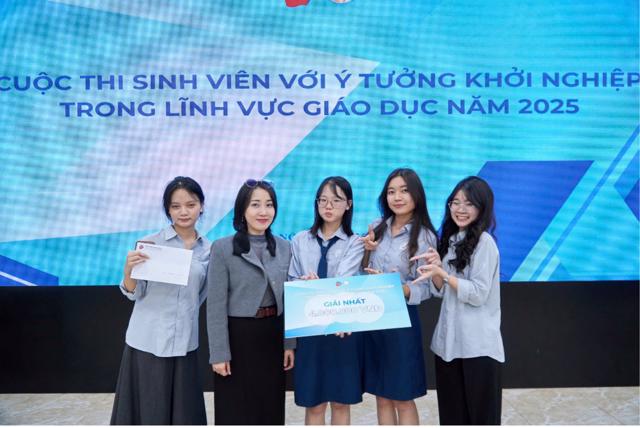
With its innovative concept, strong social orientation, and high practical applicability, E-EYES received outstanding evaluations from the Judging Panel. The project was recognized for its effective integration of academic knowledge, AI technology, and social responsibility, aligning closely with the core values of the competition.
As a result, Team E-EYES was awarded First Prize, acknowledging the project’s creativity, inclusiveness, and potential for wide-scale impact in the field of inclusive education.









Copyright ® 2026 Học viện Ngoại giao - Diplomatic Academy of Vietnam | Điều kiện | Bảo mật