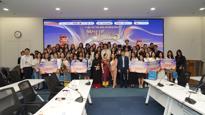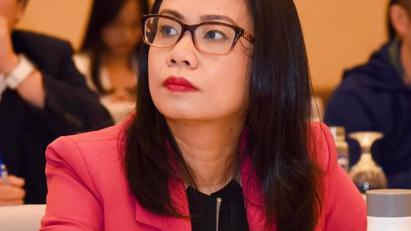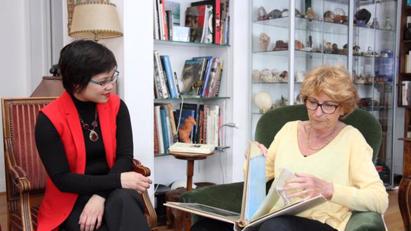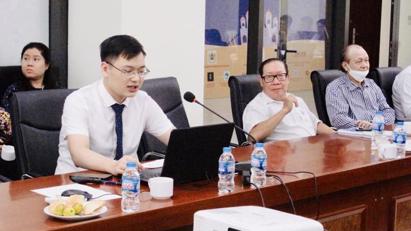


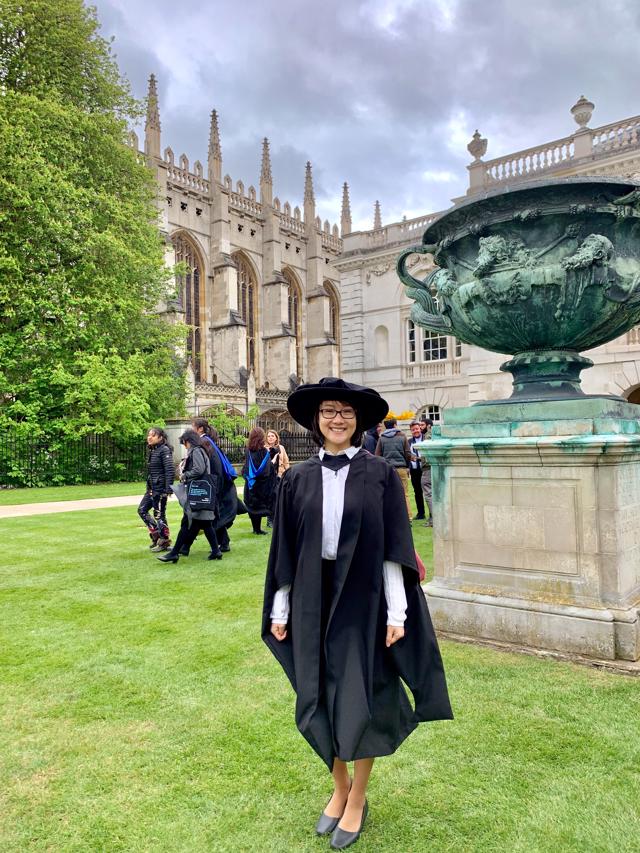
From a disoriented undergraduate in Hanoi to a lecturer in law at Utrecht University in the Netherlands, Dr. Nguyễn Ngọc Lan’s story is proof that the journey outward begins with the courage to take small, uncertain steps at home. A graduate of Cohort 32 in International Law at the Diplomatic Academy of Vietnam (DAV), she went on to earn a master’s in international law and a doctorate at the University of Cambridge, supported by scholarships from both the British government and Cambridge itself. Yet when she speaks of her proudest achievement, it is not the prestigious degrees or the professional posts abroad. It is the quieter triumph of having navigated the fog of youth, of having granted herself permission to stumble, and of eventually discovering her own voice. As she puts it, “Allow yourself to try and to fail. It is those very experiences that shape who you become.”
The Ambiguity Years and a Turning Point
Lan recalls that her most decisive period at the Academy was not the wide-eyed first year, nor the frenetic urgency of the final one, but the muddled middle: late second year, drifting into third. “I spent so much time not knowing what I wanted,” she admits. “Looking around, I saw friends not only studying but joining activities, engaging in projects. I felt passive by comparison.”
That sense of aimlessness, she insists, was not a weakness but a signal of growth. The “quarter-life confusion” so many seek to suppress was, for her, an invitation to listen inwardly. Out of that uncertainty came a pivotal moment: joining a moot court competition in the second semester of her third year. “That was when I felt I had found myself, found my passion.”
The achievement itself mattered less than the act of daring to try — an uncommon courage in a generation often haunted by the demand to be flawless from the outset. Lan’s story reframes youthful uncertainty not as a deficit but as a crucible: the place where a genuine sense of self can emerge.
In an age obsessed with speed and linear success, her choice to pause, to admit she did not yet know who she was, became a radical gesture. It is a reminder that no character is forged on a smooth road, and no resilience is born of ease. Those “lost” years, she demonstrates, were in fact the most essential — the very terrain on which she discovered who she could become.
The Greatest Legacy: Critical Thinking
“The most important skill I learned at the Academy was critical thinking,” Lan reflects. “In the Faculty of Law, through reading case law and statutes, our lecturers pushed us to analyze and to evaluate information from different angles. That is a skill you need in any career.” Her account underscores a truth often overlooked: real education is not measured in the volume of facts absorbed, but in the ability to think independently. In the classroom of life, the highest marks belong to those who dare to question, to doubt, and to seek truth on their own terms. For Lan, this discipline of inquiry became the foundation of her transformation — from a passive student to an independent researcher. What distinguished her journey was not rote memorization, but the willingness to interrogate even what she was taught, to enter into dialogue rather than mere acceptance.
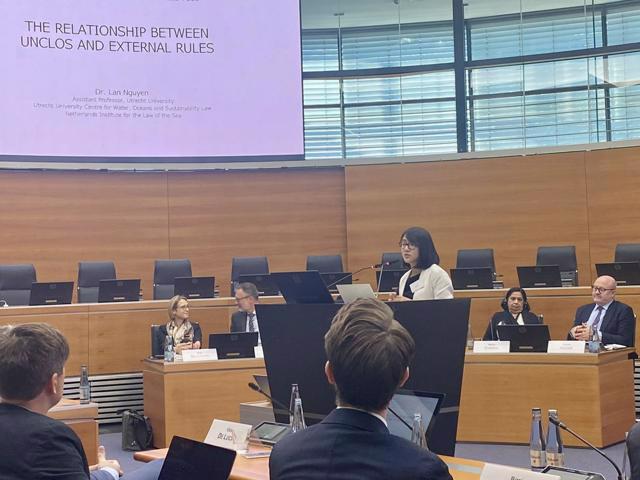
In today’s educational systems, where students are too often judged by their ability to replicate the ideas of others, her story rings as a warning bell. Are we training “walking libraries,” or minds capable of reshaping the world? The deeper lesson in her journey lies not in her Cambridge degree, but in her evolution: from passive recipient to active creator. That, she insists, is the ultimate purpose of education — not to fill the mind, but to ignite it.






Copyright ® 2026 Học viện Ngoại giao - Diplomatic Academy of Vietnam | Điều kiện | Bảo mật