

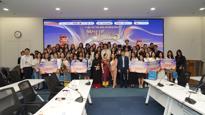
To provide students with deeper insights into the work of a television editor, the Faculty of International Communication and Culture organized an exchange session on the afternoon of December 19. The event featured editor The Cuong (ANTV Television) and international makeup artist Quan Bee. Ms. Mai Anh Thu, a lecturer for the "MC Skills" course and an editor at Nhan Dan (The People's) Television, also participated in the discussion.
According to editor The Cuong, some people who are "Mr." titleholders or Beauty Queens in real life are not necessarily suitable for a close-up shot on camera. The crucial factor for an editor's on-screen appearance is a harmonious face, with balanced features (eyes, nose, mouth, etc.).
Also discussing appearance, makeup artist Quan Bee revealed "must-know" principles for beauty. He advised never using more than three colors on the face and always being prepared with sunscreen, a set of makeup brushes, and the appropriate foundation. The guest also readily shared a tip for managing oily skin: using loose powder and blotting paper.
“Once you become an editor, you may not be a deep expert in any single issue, but you must know something about every field that comes up,” editor The Cuong affirmed. Furthermore, 21st-century editors are not mere "talking heads"; they must also be able to produce news segments and possess a high level of professional competence.
Contrary to popular belief, an editor's job is far from simple. Guest Quan Bee noted that television studios are filled with numerous lights that emit intense heat, including skin-damaging UVA and UVB rays. To counter this, an editor must always wear sunscreen during filming, continuously hydrate their skin, and maintain a diet rich in green vegetables.
As for editor The Cuong, he shared that his job demands resilience under intense time pressure. Due to the profession's nature, an editor's schedule often runs counter to normal daily routines. Therefore, those in this industry must prioritize maintaining good health. The speaker also urged students to exercise regularly and go to bed before 11 PM to prevent health issues.
After hearing about the hidden aspects of the profession, student Nguyen Hoa An shared: "I never realized that program hosts face so many challenges. The speakers' stories have made me appreciate the hard work of editors more than ever."
In response to student questions, editor The Cuong mentioned several requirements for auditioning at television stations. The first element is appropriate and polished attire. For example, when auditioning for a business news program, a candidate should not wear an ao dai, but rather modern, professional attire. He explained that suitable clothing also contributes to a host's confidence.
Furthermore, he stated that an auditioning candidate must be equipped with essential hosting skills, such as news-reading techniques and clear enunciation. These skills help candidates avoid appearing flustered or awkward in the studio.
Finally, the speaker confided: "We have been in this profession for over 10 years, yet we encounter different situations every single day." Therefore, editors in general, and auditioning candidates in particular, must possess tact and flexibility to be ready to handle any scenario.
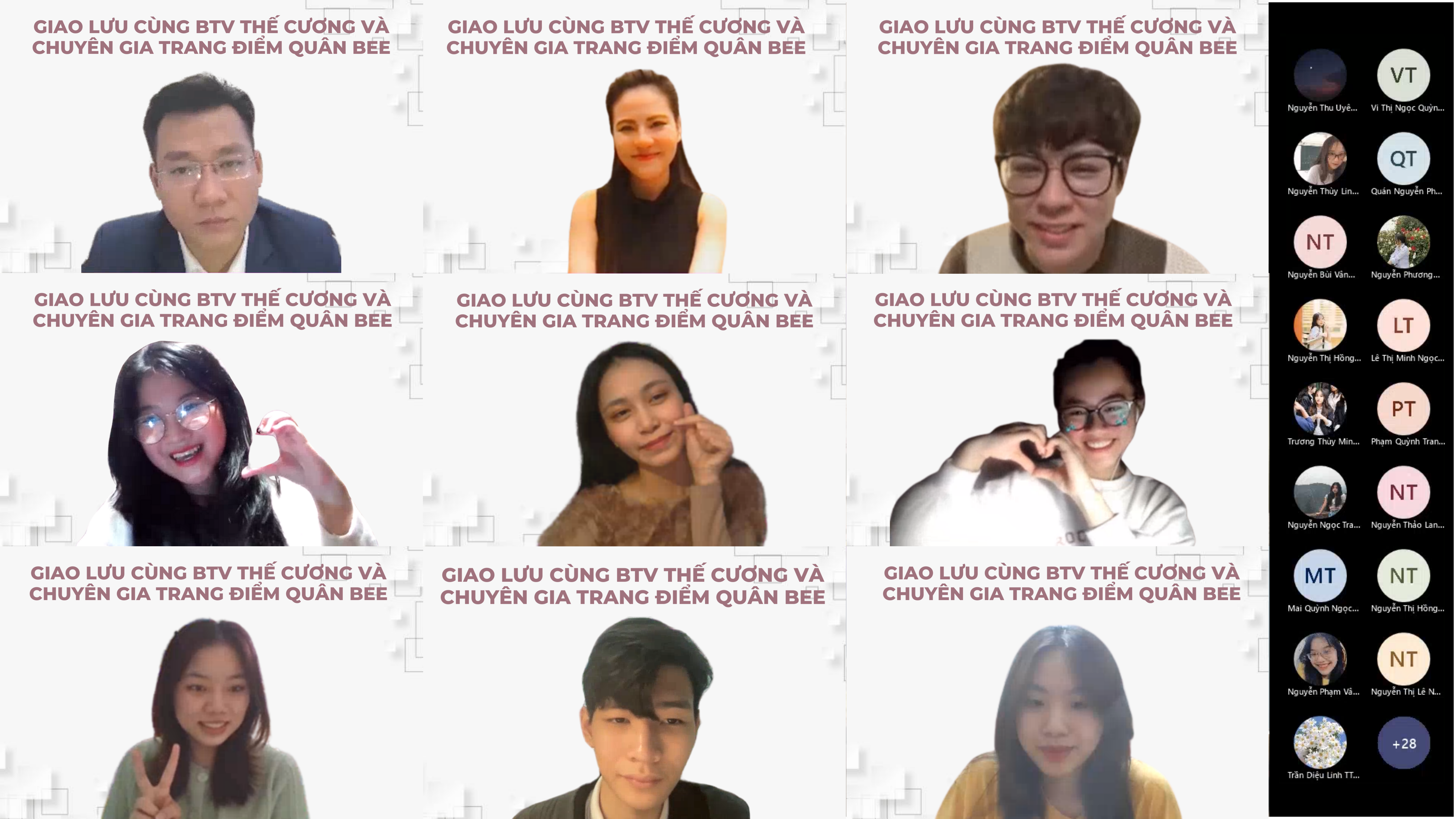
The talk show was hosted by the students from the MC Skills class themselves. This provided an excellent opportunity for students to consolidate their learning and apply it in a practical setting, laying a foundation for their future careers.
Speaking after the event, lecturer Mai Anh Thu stated: "I am very moved because you all performed exceptionally well, even better than I had expected. You were extremely confident and truly took command of the program." Ms. Anh Thu also extended her gratitude to the Faculty of International Communication and Culture, and the two guest speakers, who contributed significantly to the event's success.
As one of the student hosts for the talk show, Nguyen Quang Hien shared his enthusiasm: "On behalf of the students in the MC Skills course, I want to thank our lecturers for giving us the opportunity to try this new role. We hope that one day we can become professional, dedicated editors."






Copyright ® 2026 Học viện Ngoại giao - Diplomatic Academy of Vietnam | Điều kiện | Bảo mật

![[Recap] The Academy-level student scientific research contest: FICC Students and the journey of voicing their ideas](https://static.dav.edu.vn/411x231/images/upload/2026/01/20/605112002-1365635188693586-4814012428193017805-n.jpg)
![[Recap] Looking back at memorable moments from “GENE VIET CHALLENGE”](https://static.dav.edu.vn/411x231/images/upload/2026/01/20/600294679-1362572138999891-1988296353996430547-n.jpg)