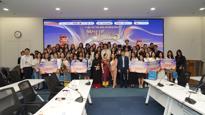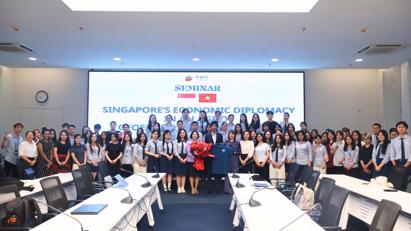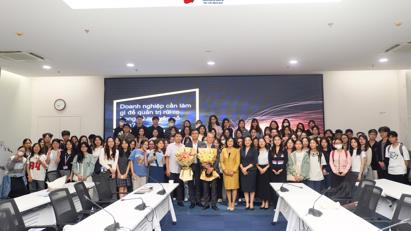


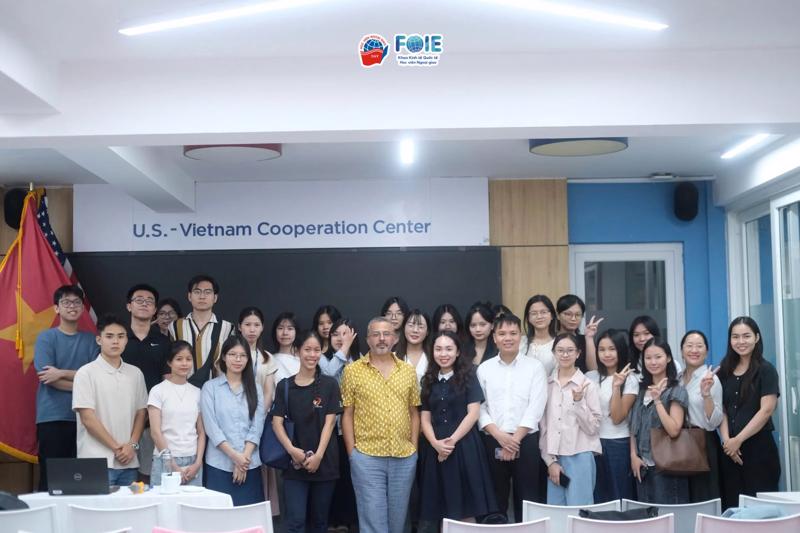
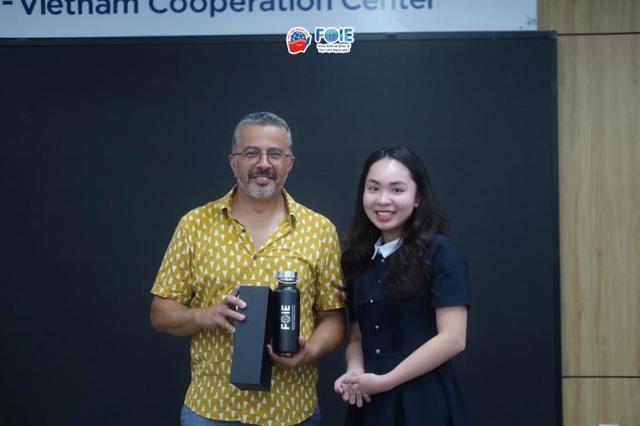
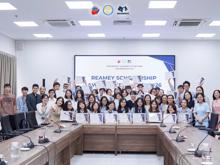
The seminar was delivered by Professor of Economics Paulo Santos from Monash University, Australia, with the participation of many lecturers and students from the Faculty of International Economics. Professor Paulo Santos has extensive experience in economics, sociology, and resource–environment economics, with a strong focus on applying Randomized Control Trials (RCTs).
During the seminar, Professor Santos introduced experimental research methods, specifically Randomized Control Trials (RCTs). This method provides an objective and accurate tool for evaluating the impact of policies or interventions by comparing a randomly selected treatment group with a control group. It allows researchers and policymakers to generate reliable scientific evidence for designing and refining policy measures.
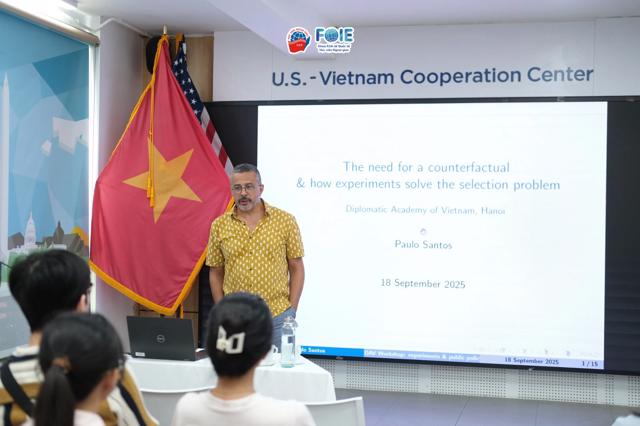
The professor also shared several case studies using this method, notably the 1997 Conditional Cash Transfer Program in Mexico. This pioneering study applied RCTs to assess the impact of poverty-alleviation policies and has offered important lessons for the design and implementation of social protection programs in many developing countries.
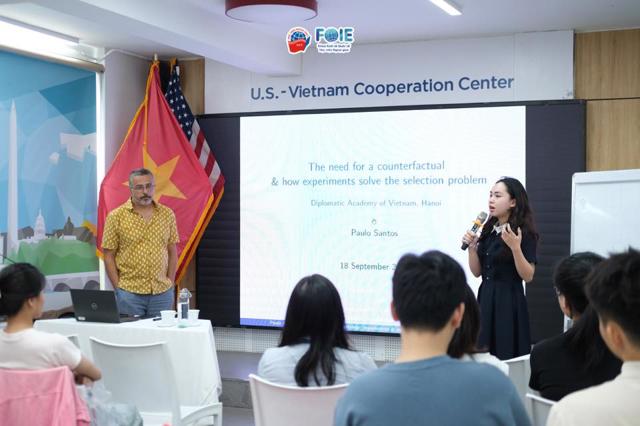
The seminar concluded with insightful perspectives and academically rich discussions on impact evaluation and randomized experiments. The event not only equipped students with exposure to modern research methods but also encouraged critical thinking, initiative, and the ability to apply scientific approaches to complex social issues. It also provided an opportunity for faculty members and students of the Faculty of International Economics to broaden their research horizons and engage with international scientific standards.




Copyright ® 2026 Học viện Ngoại giao - Diplomatic Academy of Vietnam | Điều kiện | Bảo mật