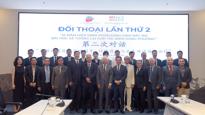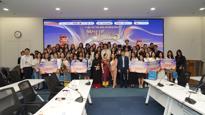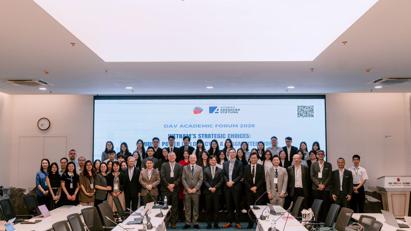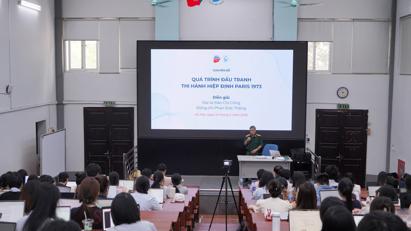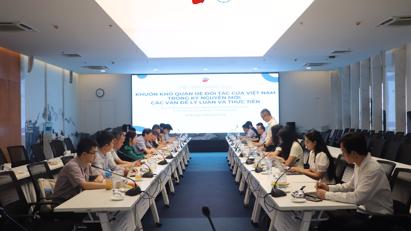


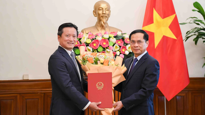
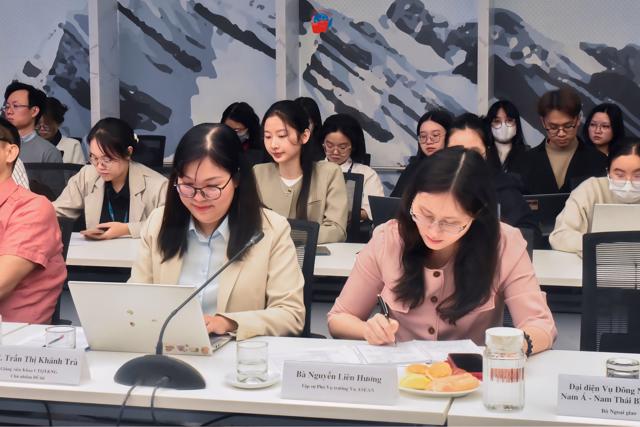
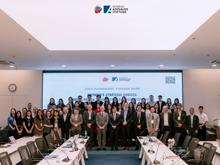
On the morning of April 4, the Diplomatic Academy of Vietnam successfully organized the scientific conference “ASEAN’s Outlook on the Indo-Pacific: New Developments, Opportunities and Challenges”, within the framework of the Ministry-level Independent Research Project “ASEAN’s Perspectives on the Indo-Pacific and Vietnam’s Participation”, chaired by PhD Candidate Tran Thi Khanh Tra, Lecturer at the Faculty of International Politics and Diplomacy, Diplomatic Academy of Vietnam.
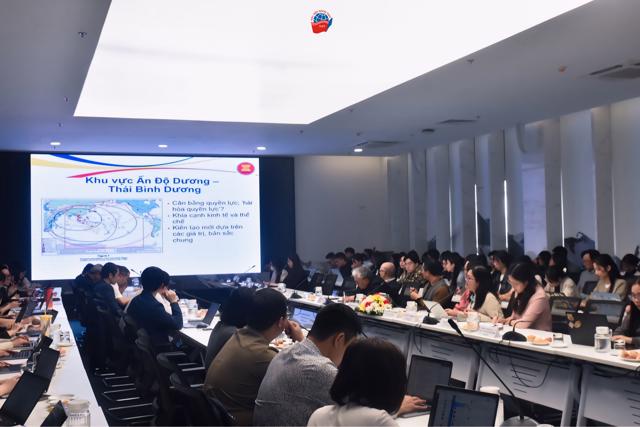
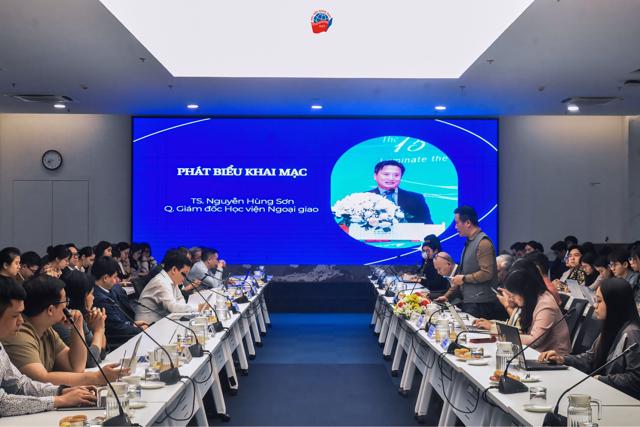
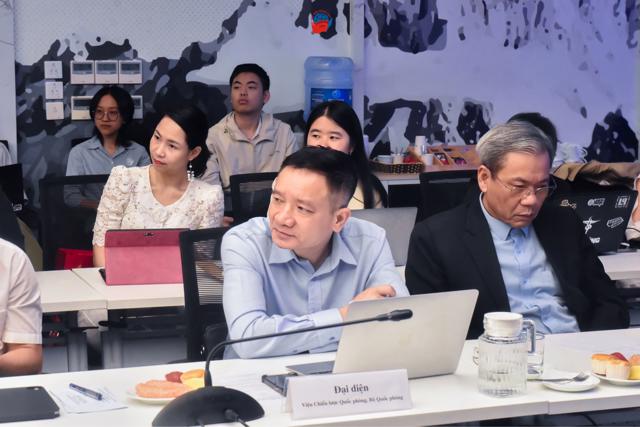
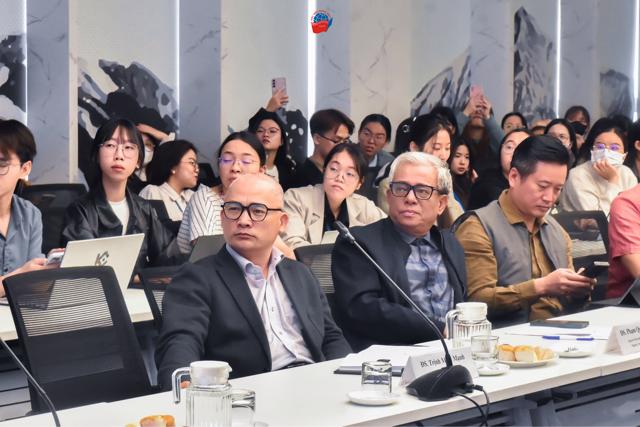
The conference was attended by Dr. Nguyen Hung Son, Acting President of the Diplomatic Academy of Vietnam; Ambassador Pham Quang Vinh, former Deputy Minister of Foreign Affairs, former SOM ASEAN Vietnam Leader; Ambassador Nguyen Trung Thanh, former Assistant to the Minister of Foreign Affairs, former SOM ASEAN Vietnam Leader; Ambassador Ton Sinh Thanh, former Ambassador of Vietnam to the Republic of India; Ambassador Trinh Minh Manh, Acting President of the Institute for Strategic Studies; Mr. Duong Tri Hien, Deputy Director-General of the ASEAN Department, Ministry of Foreign Affairs; Assoc. Prof. Dr. Vo Xuan Vinh, President of the Institute of History, Vietnam Academy of Social Sciences; Assoc. Prof. Dr. Ha Anh Tuan, Acting Dean of the Faculty of International Politics and Diplomacy, Diplomatic Academy of Vietnam, together with many scholars and experts from research units of the Ministry of Foreign Affairs, Ministry of National Defence, Ministry of Public Security, as well as a large number of lecturers, learners, researchers, and students of the Diplomatic Academy of Vietnam.
Within the framework of the conference, ambassadors, international relations scholars, and the research team focused on evaluating the actual implementation of ASEAN’s Outlook on the Indo-Pacific (AOIP) from 2019 to the present, analysing ASEAN’s central role in the Indo-Pacific region, examining opportunities and challenges amid intensifying strategic competition, and proposing concrete policy recommendations for Vietnam.
In his opening remarks, Dr. Nguyen Hung Son emphasized the need to clearly define the term “Indo-Pacific region” — a newly-formed regional structure and a prominent geopolitical phenomenon in recent years. Over the past few years, there has been a “wave” of global strategic realignment toward the Indo-Pacific region, with 15 countries already issuing policies (under different names such as Vision or Strategy) to respond to, take advantage of, or interact with the region at various levels and approaches. This phenomenon is interesting in that these policies place Southeast Asia at the centre, particularly the South China Sea, which plays the role of connecting the two oceans. Dr. Nguyen Hung Son stressed that ASEAN’s adoption of a common regional outlook (AOIP) has created an important basis for Vietnam to use the term in a relatively flexible and well-grounded manner, avoiding political sensitivities.
With four papers presented directly at the conference, experts focused on clarifying: (i) ASEAN’s approach and role toward the Indo-Pacific region; (ii) ASEAN’s efforts to concretise its outlook in a rapidly shaping region amid intertwined challenges and opportunities since 2019; (iii) the future of the AOIP and policy implications for Vietnam. In the keynote paper, PhD Candidate Tran Thi Khanh Tra explained the differing approaches to the Indo-Pacific between scholars and policymakers based on three major international relations theoretical schools — Realism, Liberalism, and Constructivism. Due to differences in regional perceptions, scholars and experts express different views on the emergence and nature of the AOIP. Some believe that the AOIP is a reaction by Southeast Asian countries amid intensifying major-power competition, while others emphasise the economic-maritime dimension, connectivity within the AOIP, and the need to institutionalise the region in line with the “ASEAN Way”, which upholds ASEAN’s centrality in a regional architecture that is taking shape.
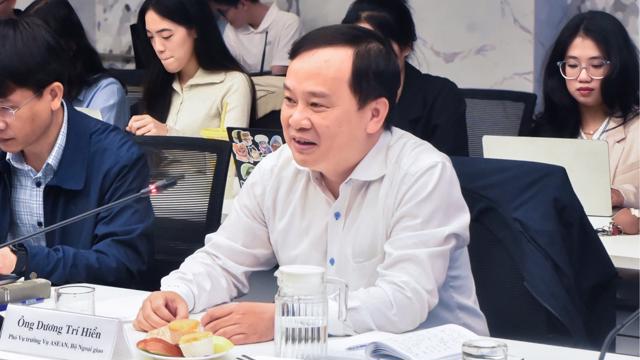
In his presentation, Deputy Director-General Duong Tri Hien provided an overview of the AOIP — from the foundation of ASEAN’s open regional thinking that shaped the AOIP, to its contents, principles, and ASEAN’s implementation since 2019. ASEAN has made great efforts to mainstream and implement the AOIP within its existing mechanisms; continued to reaffirm political commitment at the highest level, as seen at the 44th–45th ASEAN Summits in October 2024, as well as promote implementation at the sectoral level; and put forward concrete cooperation initiatives such as the ASEAN Indo-Pacific Forum 2023. At present, seven ASEAN partners have issued statements supporting the AOIP and announced funding to assist ASEAN in implementing the AOIP. It can be said that the AOIP, from a document initially considered ASEAN’s response to major-power realignments, has gradually become a mandatory criterion in ASEAN’s relations with its partners. With the positive achievements to date, the AOIP is considered relatively successful and continues to affirm its role and value; for ASEAN, the AOIP remains a “handbook” for engagement with partners; for partners, the AOIP is a pathway to cooperate and integrate with ASEAN.
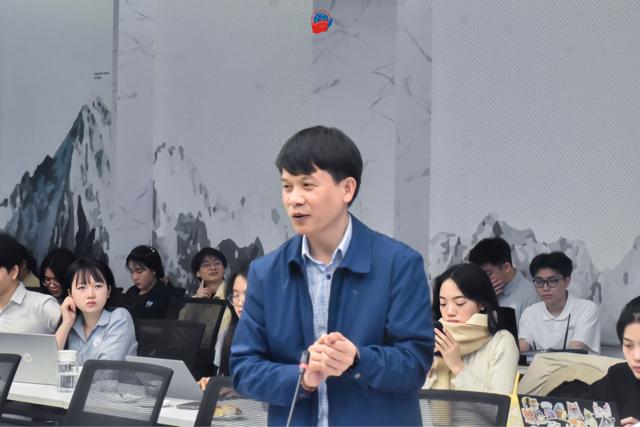
The papers by Assoc. Prof. Dr. Ha Anh Tuan and Assoc. Prof. Dr. Vo Xuan Vinh further deepened critical aspects related to ASEAN’s centrality in the Indo-Pacific, the challenges ASEAN faces in promoting the AOIP, and several recommendations for Vietnam.
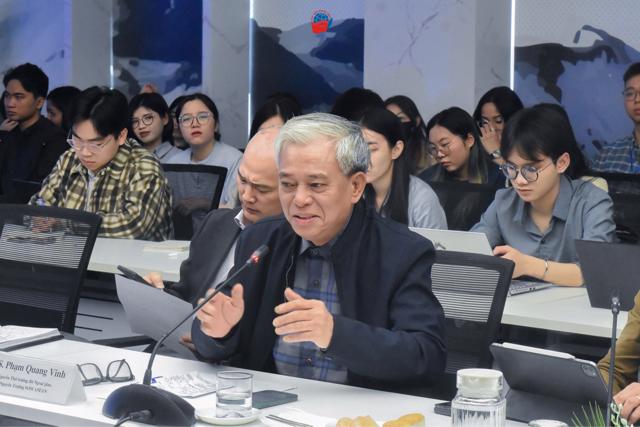
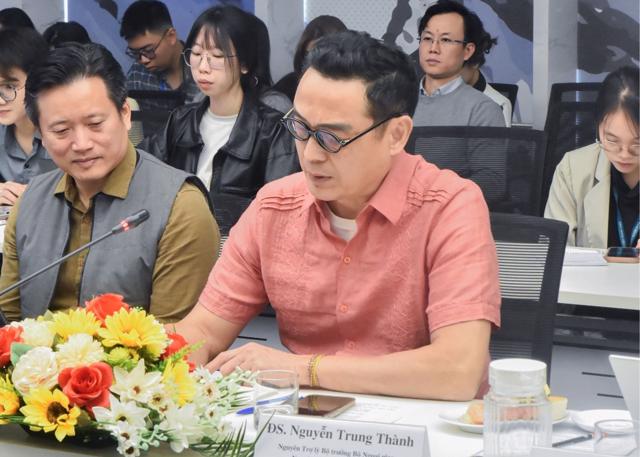
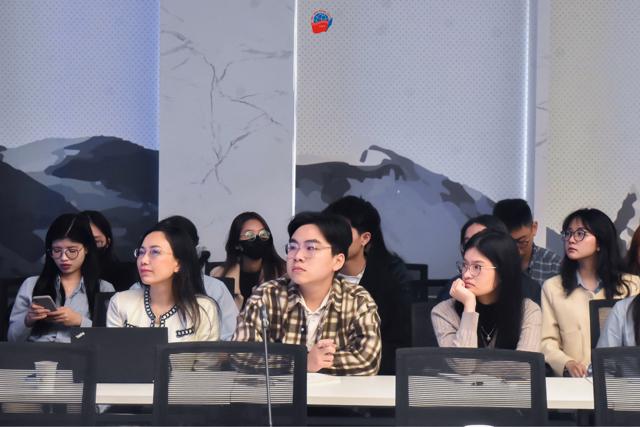
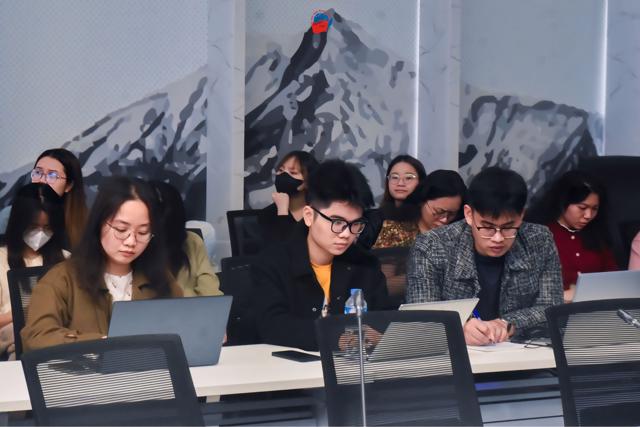
The conference took place in a lively atmosphere, with many speeches and discussions by ambassadors and researchers. Ambassador Pham Quang Vinh posed a number of strategic and thought-provoking questions on the nature, implications, and sustainability of the Indo-Pacific term and ASEAN’s role within the regional architecture. He emphasised that although ASEAN-led regional mechanisms still have limitations, nothing has replaced them. The AOIP is both a response by ASEAN to unpredictable geopolitical and geoeconomic shifts in the region and a way for ASEAN to proactively engage major partners and regional linkages — particularly in close connection to build the ASEAN Community by 2045, placing economic integration as a priority. Sharing views with conference participants, Ambassador Nguyen Trung Thanh raised the issue of ASEAN’s strategic autonomy through proactive and active regional engagement and highlighted the need for adaptation to regional fluctuations. ASEAN needs to transform its conceptual orientation into an action orientation and build greater strategic autonomy in the new game.
The opinions and exchanges of delegates at the conference will make practical and significant contributions to Vietnam’s foreign policy research and policymaking in particular and to the development strategy of ASEAN in general in the new context. Particularly, in the context in which Vietnam is entering a period of rising and affirming its position and proactive role in the region and the world, contributing to regional initiatives such as the AOIP is especially important. The AOIP demonstrates ASEAN’s commitment to a region that is open, inclusive, cooperative, and respectful of international law. With a spirit of proactiveness and responsibility, Vietnam will be able to put forward initiatives and action programs to contribute to implementing the AOIP, building a peaceful, stable, and sustainable regional environment.
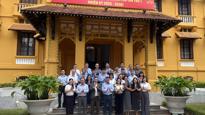
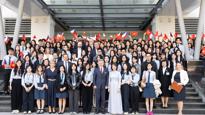
Photos from the conference:





Copyright ® 2026 Học viện Ngoại giao - Diplomatic Academy of Vietnam | Điều kiện | Bảo mật