

“Politics and Peace - Global Cooperation in the Age of Globalization”
Diplomatic Academy of Vietnam, Hanoi, 18 March 2013
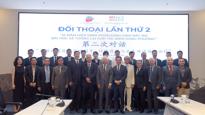
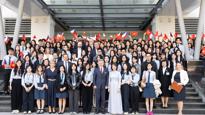
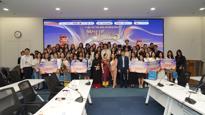
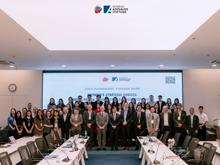
Former Italian Prime Minister, former President of the European Commission (EC) and President of the African Union-UN peacekeeping panel Romano Prodi delivered a speech themed “Politics and Peace - Global Co-operation in the Age of Globalization” at the Diplomatic Academy of Vietnam (DAV) on the afternoon of March 18, 2013. This event was conducted within the framework of a series of events named “Bridges-Dialogues Towards a Culture of Peace” hosted by International Peace Foundation. Attending the event were representatives of International Peace Foundation, embassies in Hanoi, universities, research institutes as well as the staff and 250 students of DAV.
During his speech, Prof. Prodi has stated that the 21st century is witnessing enormous political and economic changes. If 20 years ago, a scholar declared “the end of the history…” due to America’s dominating power at that time, then we are now witnessing “the start of the history”. The US participation in Iraq war as well as many other battles worldwide dramatically reduces its power. Meanwhile, in Asia, not only China but also India and many other regional countries show an incredible growth in both politics and economy. The average economic growth of Asia has reached 7.5% in recent years while the figure was only 2% in the US and just over 0% in Europe. The BRICS (Brazil, Russia, India, China and South Africa) and Turkey, as newly emerging economies, are playing a more important role in regulating the global economy. Obviously, the world is shifting from the uni-polar to multi-polar state.
Apart from Asia, Africa, with more than 2 billion people and a young population structure, also sees impressive changes. This continent has drawn the concerns from super powers, in which China is the only one that has a comprehensive African policy. While such powers as the US have involved in numerous armed conflicts all over the world, China avoids joining them. Instead, for decades, China has been heavily investing in Africa.
The recent economic crisis, the longest since the World War II, has negatively impacted people all over the world, including creating social inequality and widening income gap. These problems prevail not only in Europe and the US but also in such emerging economies as China or India, which results in low growth quality in many economies. These countries also face dilemma as they wish to apply stimulus policies while household incomes decline.
The professor, however, emphasized the important role of the EU in the world politics and economy. The continent has remained a large production centre and export market, as well as a key economic and financial centre of the world, he affirmed.
Over the past few years, the world has witnessed a great number of huge changes in energy and new technology. The use of shale gas usage has enabled many countries to be self-sufficient in their energy supply, especially the US. This can lead to the fact that the big powers have no longer to rely in the Middle East for petroleum supply, which may result in changes in their policy strategy as well as the balance among various regions.
With such huge changes in the world and the shift toward a multi-polar world, there is a more urgent need for a blanket management mechanism than ever. For the time being, even mechanisms such as G20 have not yet played that role. Therefore, we should use our brain power to build such structures that can deal with emerging issues from the Middle East to Asia-Pacific. Despite many conflicts and interest differences, the common trend is that countries will reach consensus on common issues, namely terrorism fight, prevention of riots, natural disasters, diseases, etc. In such a complicatedly changing world, we need to have good will, negotiations and compromises so that we can lead the world to peace and co-operation.


Copyright ® 2026 Học viện Ngoại giao - Diplomatic Academy of Vietnam | Điều kiện | Bảo mật