

The DAV is known as a reliable institution providing high-quality human resources for ministries, businesses, international organizations in general and a training center for the MOFA in particular, could you please talk about the outstanding achievements in education and training as well as fostering cadres in recent years?
With more than 60 years of establishment and development, the DAV is a tertiary education institution which meets the national standard, and the only institution under the MOFA that provides training for doctoral, master and bachelor degrees. As of 2021, the DAV has recruited 11 International Relations PhD courses, 04 International Law PhD courses, 21 International Relations Master courses, 09 International Law Master courses, and 07 International Economics Master courses, 48 undergraduate courses, 05 college courses, 23 intermediate courses so far.
The DAV graduates are highly appreciated by the labor market for their competencies, including knowledge, skills, and foreign languages; for the vital qualities to meet the diverse needs of the market such as high adaptability, dynamism, creativity, confidence, and professionalism. Many students have affirmed themselves and promoted well in different job positions, not only at the MOFA and other Ministries, Central agencies but also in such sectors as banking, press and media, corporations, businesses, as well as diplomatic missions in Vietnam, international organizations, domestic and overseas representative offices.
According to the annual survey data, over 90% of the DAV graduates are employed (including further studies) within 12 months of graduation. The average initial salary ranges from 7-15 million VND, in which, as stated by the analysis of experts from the external evaluation team working with the DAV in January 2021, the percentage of the DAV graduates with a salary above 10 million VND is quite high compared to other institutions.
In terms of working in state agencies, the DAV’s alumni are honored to have 2 comrades who are currently members of the Politburo, 4 members of the Party Central Committee and many other comrades who are holding important positions in the Party and State agencies. The DAV is also extremely proud that many generations of leaders, ambassadors, director generals and key officials of the Ministry of Foreign Affairs, as well as talented young officials are alumni of the Academy.
The Foreign Service Training Center (FOSET) under the DAV has its function of training and fostering knowledge, skills, external affairs, and foreign languages for the MOFA’s civil servants and officials and the foreign department of ministries, branches, and localities along with providing training and fostering services for organizations and individuals in need.
The DAV is assigned to be in charge of expertise and organization of implementing fostering courses within the framework of 03 Government Projects, which is a project on "Fostering Knowledge and Skills for Cadres, Civil servants, Officials in International Integration in 2016-2020 and 2021-2025 Phases", and another entitled "Training and Fostering Knowledge and Skills for Staff Working in People’s Foreign Affairs in 2021-2025 Phase”, as well as a project on “Fostering Foreign Affairs and Improving Foreign Languages, Translation and Interpretating for Local Foreign Affairs Officials in 2016-2020 and 2021-2025 Phases”.
In particular, the Government Project on fostering cadres, civil servants and officials in international integration is the first project on training and fostering diplomatic cadres of great scale and influence, in which leaners were officials working in foreign affairs and international integration from all ministries, branches and localities across the country. In recent years, FOSET has organized nearly 450 training courses for cadres inside and outside the MOFA, of which in the 2016-2020 period, 306 courses were organized for more than 19,000 learners, including 103 fostering courses for the MOFA’s cadres, 140 fostering courses for cadres, civil servants and officials working in foreign affairs at ministries, branches and localities, 28 fostering courses for local foreign affairs officials, and 34 translation and interpretation courses for agencies, organizations and businesses with their own needs.
A special feature of the courses by FOSET is that they follow an advanced model which combines knowledge and skills, selects topical and highly applicable topics, designs concisely and effectively, makes them suitable for learners' needs, invites leading national consultants and foreign experts, and gains high interactions between trainers and trainees. Therefore, despite not granting diplomas and certificates of special value, FOSET's courses always attract a large number of learners, create active and substantive participation, and leave good impressions on learners.
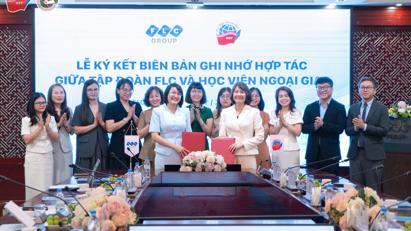
The DAV also attaches great importance to and actively promotes domestic and international cooperation in research, training and fostering, especially with partners from countries with advanced education and training backgrounds. Currently, the DAV has cooperative relations with more than 80 institutes, centers, agencies, research organizations and universities both domestically and internationally. The DAV has signed cooperation agreements with 58 research, training and fostering institutions around the world, including countries from all continents. Even during the Covid pandemic, the number of research and training institutions in the world wishing to establish cooperative ties with the DAV is constantly increasing.
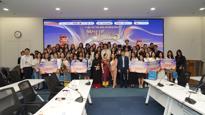
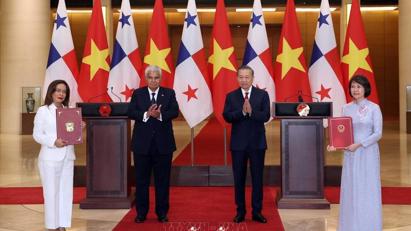
In 2020-2021, the DAV held an Online Cooperation Agreement Signing Ceremony with universities and research institutes in the Middle East and in America. Online workshops and talks with foreign partners are conducted regularly and without interruption in 2020-2021 with high quality and the participation of leading experts in the world in various fields. Regarding training cooperation, the DAV has a joint training program for Master and Bachelor of International Relations with University Lyon III (France) and Victoria University of Wellington (New Zealand). The DAV has just signed a Cooperation Agreement with the University of Bristol, UK and is promoting the building of a Training Program in conjunction with Bristol in 2022. The Academy is a member of the Diplomatic Academy network of ASEAN +3 (China, Japan and South Korea).
Over the past years, the DAV has been continuously recognized by the MOFA as an excellent unit in the Ministry and awarded many medals by the State such as: First-class Labor Medal (1994), Third-class Independence Medal (1999), Second-class Independence Medal (2004), Ho Chi Minh Medal (2009), First-class Independence Medal (2019). In addition, the Academy has been awarded many Certificates of Merit and Emulation Flags from the MOFA ministers, Ministries, Branches, Hanoi city and Party organizations and Unions.
In your opinion, in the current context, what opportunities and challenges are being faced by the training and fostering activities of the DAV ?
In the context that foreign affairs and international integration are being promoted, the country and society's demand for fields and majors that the DAV is training and fostering is increasing. Besides, with many years of prestige, high-quality and dedicated lecturers, advanced and healthy training environment, the quality of graduates has been verified by society and affirmed in practice, the DAV firmly believes that many talented and young generations always nurture the earnest desire to study, train and grow from the DAV. However, the DAV is also aware of the need to further improve the training program to be more closely related to reality, to open new majors in which the DAV has advantages, simultaneously to meet the wide demand of the society.
An outstanding strength of the DAV is that most of our staff and lecturers are trained at leading schools in the region and the world, and they can directly teach specialized subjects in many different foreign languages as well as having a passion and cutting-edge approaches in training and research. Many prestigious lecturers and researchers of the DAV have in-depth professional knowledge and are diplomats with extensive practical experience. Besides the Professors, Associate Professors, PhDs, the DAV also has a team of lecturers who have held the role of ambassadors or senior personnel at international organizations. In addition, the Academy also has a network of senior national and international experts who regularly collaborate in training and fostering activities. Furthermore, the Academy is also the only research training institution that establishes and maintains close cooperation relationships with the network of overseas Vietnamese representative agencies as well as the representative agencies of other countries and international organizations in Vietnam.
Implementing the policy of the Party and State to increase the autonomy of higher education institutions in organization, finance, training, research, and international cooperation, the MOFA has issued a decision to make the DAV autonomous in recurrent expenditures from 2021. The fact that the DAV starting to operate under the regime of autonomy in recurrent expenditures is not a small challenge, but also an opportunity for our staff to be determined to further improve the quality of operations in all aspects, to best meet the needs of the State and society.
With high determination, spirit of solidarity and tireless efforts of all lecturers, researchers and staff of the DAV, especially under the direction, supervision and dedicated support of the MOFA leaders and departments, the DAV confidently overcome the challenges in the early stages of its transition to autonomy, from finding enough financial resources to pay salaries and operating costs, to motivating staff to best perform the important political tasks undertaken by the two research institutes and FOSET, to improving training quality and service quality, aiming at the goal of providing advanced training services, approaching regional and international standards.
Also, to achieve this goal, the DAV is the first higher education institution in the country to have completed 100% accreditation of all training disciplines, creating a premise to be able to exercise autonomy in enrollment. The DAV also promotes reasonable and effective recruitment, placement and arrangement of personnel. And especially, the DAV has made great efforts to build and renovate the campus so that the next generations of students and trainees will be able to practice and study with spacious and modern facilities. Many big things and such important changes put a lot of pressure on the entire academy, besides the impact of the Covid pandemic also added difficulties to its activities.
However, the approach of the lecturers and staff of the Academy is to keep finding opportunities in challenges. The transition to autonomy is really an unprecedented challenge for the DAV, but at the same time, it also creates a strong motivation for each person and the whole academy to make tireless efforts, awakening our survival instinct. The pressure of autonomy and the high determination of the units helped the Academy complete a task that seemed impossible and delayed for many years - the accreditation of training disciplines.
The requirement of social distancing during the pandemic is perceived by everybody as an opportunity to promote the application of information technology and online forms in organizing seminars, learning, meetings, and other activities of the DAV. The strict regulation of "working from home" is seen as a fortunate coincidence that causes staff to move out of the DAV to implement the project of construction, repairing and upgrading our facilities so that it does not create psychological stress for them. When Directive 16+ was conducted to Hanoi from the end of July 2021, the DAV has prepared and determined to plan the implementation of the strictest measures according to regulations to apply for the construction project to be approved to continue to ensure the completion of the work within 12 months and to welcome the new academic year timely.
After overcoming the most difficult initial steps of transition to autonomy, the DAV’s Board of Directors are the ones who are most aware of and understand the insight direction role of the leaders of the Ministry. With a strategic and long-term vision, the Ministry leaders actively encouraged and advised the DAV to switch to autonomy as well as accompanying and supporting the Academy to overcome the most difficult challenges.
Facing such opportunities and challenges, in order to maintain its position as a garden of high-quality human resources and to train and foster officials in foreign affairs and international integration, serving not only the MOFA but also other ministries, branches, localities and businesses. What are the orientations and solutions for the DAV in the coming time?
With the spirit of taking advantages of opportunities and turning challenges into opportunities, the DAV is completing and implementing a development strategy in the new period of 2021 - 2025 with a vision to 2030, with a focus on innovating and improving the quality and effectiveness of training and fostering in accordance with the following main solution orientations:
The first is to scale up training. Starting from this year, the DAV has implemented an enrollment project with many new and breakthrough points compared to previous years - sharply increasing enrollment targets, adding more diverse admission methods, opening more programs, additional selection of new foreign languages in addition to English, French and Chinese such as Korean and Japanese. The Government's projects on fostering knowledge and skills for civil servants and officials in international integration and peoples’ foreign affairs and local foreign affairs officials, which the DAV is the focal point in charge of implementation also has an expanded scale with the participation of most ministries, branches and localities across the country.
The second is to improve the quality of training and fostering, especially focusing on innovating training programs and methods in the direction of logic and modernity, in order to adapt to the situation and meet the requirements set forth. The combination of research and teaching is identified as a central solution. Besides the function of training and fostering, the DAV is also a core unit of strategic research and in-depth research to serve the country's foreign affairs and comprehensive international integration. Promoting scientific research in the coming time is considered to be of vital importance, not only for advising on planning and implementing the Party and State's external affairs, but also for the quality of training and fostering of the Academy.
In addition to traditional teaching approaches, the DAV plans to improve the quality and innovate training methods in the form of: Organizing seminars for students with experts, social activists, celebrities, going on field trips at agencies and organizations related to their majors such as foreign representative agencies in Hanoi, overseas Vietnamese missions agencies, departments of the overseas Vietnam News Agency, international organizations in the country and abroad; Strengthening scientific research activities among students, introducing and organizing students to participate in domestic and international competitions associated with their majors in order to arouse potentials and motivate students to strive in learning; Promoting internships and career guidance for students, creating conditions for students and trainees to attend receptions, meetings and exchanges with foreign politicians, ambassadors, and high-ranking officials to Vietnam or participate in supporting major international conferences held in Vietnam and student exchange programs with the DAV’s partners abroad.
The third is to increase investment in facilities and application of information technology in training and fostering. The DAV is entering the stage of completing the investment project to build a new lecture hall with a system of classrooms, lecture halls, and international conference and seminar rooms of modern equipment and suitable for teaching and training of the Academy, and at the same time actively implementing projects to upgrade the electronic and digital libraries.
In the current 4.0 technology era and especially due to the impact of the Covid-19 pandemic, it is urgent to apply technology and train lecturers who are knowledgeable about skills and "E-learning" methods (Online learning using Internet connection), and “Blended learning” (e-learning method combined with traditional classroom methods) is an urgent task. Well aware of this, the DAV is and will focus on investing in online teaching and learning software, inviting experts to share and guide lectures and staff of the Academy to build programs and online teaching methods so that they are lively, attractive to always be proactive, ready to respond best in new situations.
The fourth is to build a team and apparatus on the basis of standardization by degrees, fields of teaching and research, associated with the foreign affairs work of the MOFA to combine theory and practice, take advantage of the Academy's cooperation network with research and training agencies to send staff and lecturers to attend short and long-term training courses at home and abroad, invite experts to help improve the level of training management, towards standardization at regional and international level.
In summary, along with the extensive, comprehensive development and integration of the country as well as the needs of the society, the duties posed for the work of the whole diplomatic sector in general and the training of human resources working in foreign affairs in particular is getting higher and more urgent. Being well aware of that, the entire staff and lecturers of the DAV are determined to maintain their position as the leading research, training and fostering institution in Vietnam in foreign affairs and international integration, striving to reach the leading group in the region by 2030.
Thank you very much!








Copyright ® 2026 Học viện Ngoại giao - Diplomatic Academy of Vietnam | Điều kiện | Bảo mật